
Hispanic Heritage Month art projects are a great way to highlight Hispanic artists and Hispanic culture. They give elementary and middle school students a chance to see themselves in the art room. Learning about Hispanic visual artists introduces kids to powerful voices, big ideas, and colorful styles. These lessons inspire creative risk-taking through art — something worth sharing all year long.

In my own classroom, I like to share artists like Fernando Llort, Marta Minujín, Enrique Pichardo, and Amelia Peláez. They use bold hues, pattern, and storytelling in their artwork. Kids love the energy in their art. It encourages them to make projects that reflect their own heritage, culture, interests, and ideas.
These lessons work for grades K–8. They invite children to construct something meaningful while learning about artists from Mexico, Cuba, El Salvador, Argentina, and more.
17 Contemporary Hispanic Heritage Month Art Projects for Elementary and Middle School
Here are 17 contemporary Hispanic artists and Hispanic Heritage Month art projects that would be fun to teach. These are perfect for elementary and middle school art classes. Their artwork is colorful, creative, and full of themes and subjects kids connect with.
I’ve also included art project suggestions for each artist that work well for both elementary and middle school. These Hispanic heritage projects aren’t just for September — they fit beautifully any time of year when you want children to make meaningful, personal art.
1. Fernando Llort
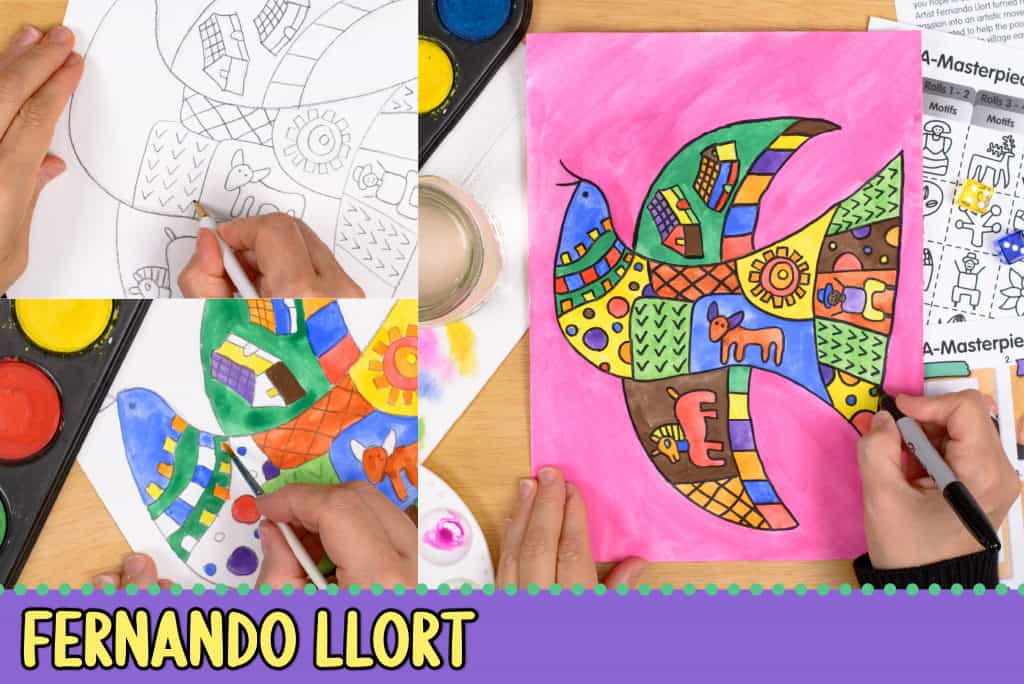
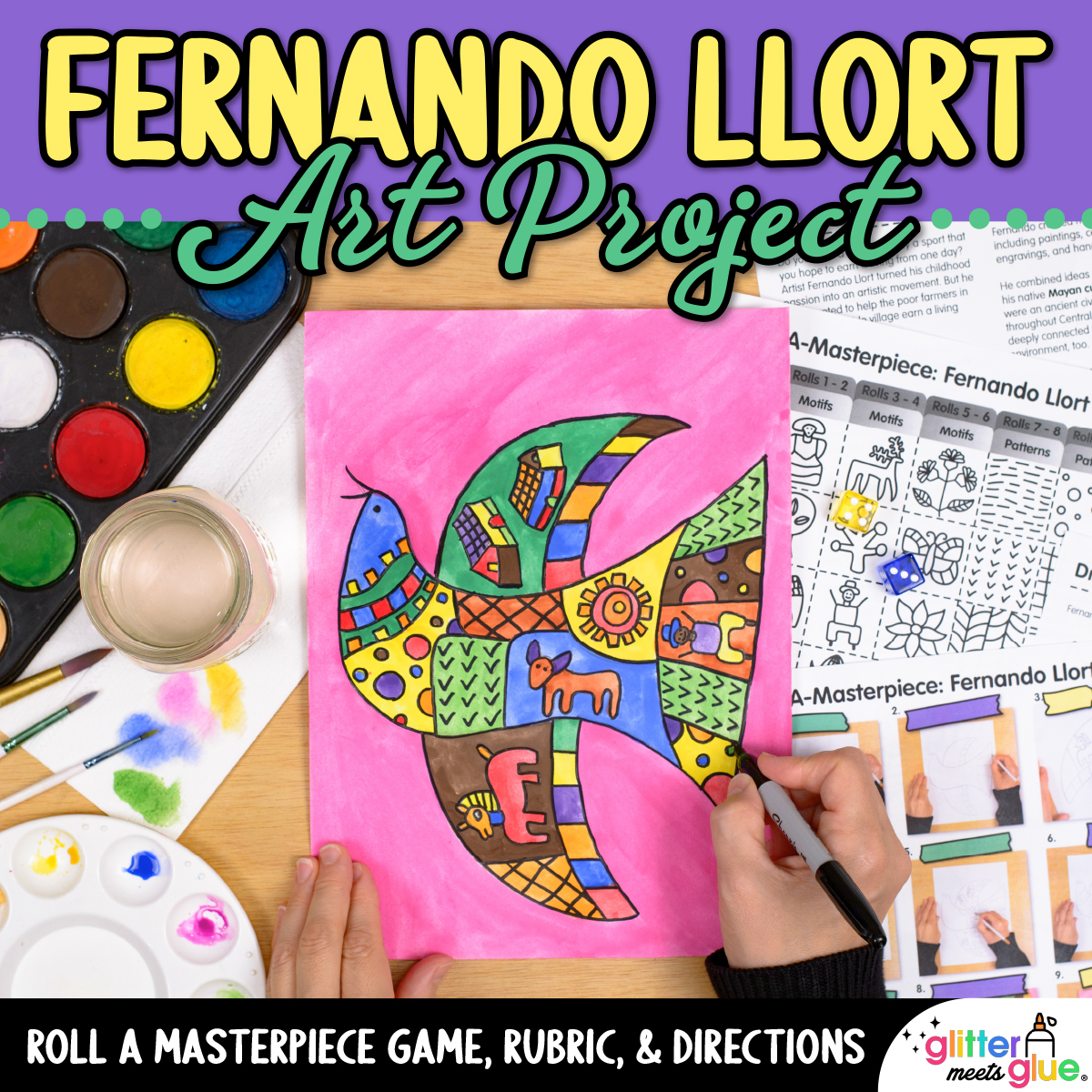
Fernando Llort was from El Salvador and known for Folk Art paintings, murals, and crafts. He used vibrant, simple forms and often depict everyday life, nature, local people, and his community. His style was very accessible, joyful, and rooted in local culture and symbols. Fernando Llort trained the people of La Palma, a small farming village, to reproduce his art so they could earn a living.
Llort’s art is especially wonderful for younger elementary children (grades K-3). It can also be used with upper elementary when discussing community, local culture, and symbolism. He’s one of my favorite Hispanic Heritage Month art projects to teach because his style is so approachable.
Art Project Ideas
- Draw and paint a bird using Llort’s style — strong outlines, bright hues, and simplified shapes.
- Make a mural on paper with repeating community symbols like animals, plants, and houses.
- Design a set of folk-art tiles, each showing a symbol or scene from their life — like favorite places, pets, foods, or hobbies. Students can arrange them together to tell a bigger story about who they are or what matters to them.
2. Marta Minujín
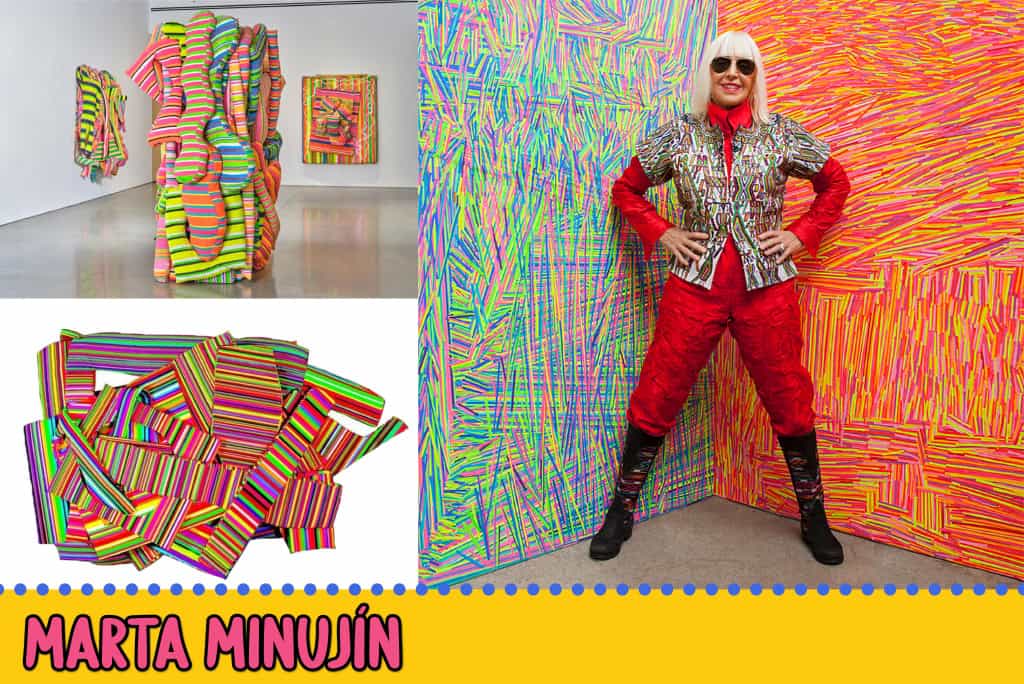
Marta Minujín is from Argentina and is known for her bold, experimental art. She arranges large participatory events (“happenings”), installations, and pop-art inspired artworks that invite the audience to join in. She uses playful materials like mattresses, cardboard, and even neon lights to create chromatic, eye-catching pieces. Some of her art is designed to be temporary, turning everyday objects into surprising works of art.
Minujín’s large-scale, interactive pieces are inspiring for both elementary and middle school kids. Her artwork is perfect for a collaborative Hispanic Heritage Month art project that gets children working together. Middle schoolers enjoy thinking beyond traditional art boundaries and being part of art themselves. Alternatively, I like using her to teach 1st and 2nd graders about warm and cool colors!
Art Project Ideas
- Craft a collaborative mural on black roll paper. Use fluorescent soft or oil pastels to design something that feels like a glowing neon room.
- Weave or layer eye-popping colored strips of paper into a large collaborative wall piece. Capture Minujín’s playful, immersive style.
- Paint with neon or fluorescent hues to turn a favorite place, object, or pop culture icon into a glowing piece. Students can pick something meaningful — like a favorite snack, a video game character, or a landmark — and make it pop against a dark background.
3. Amelia Pelaez
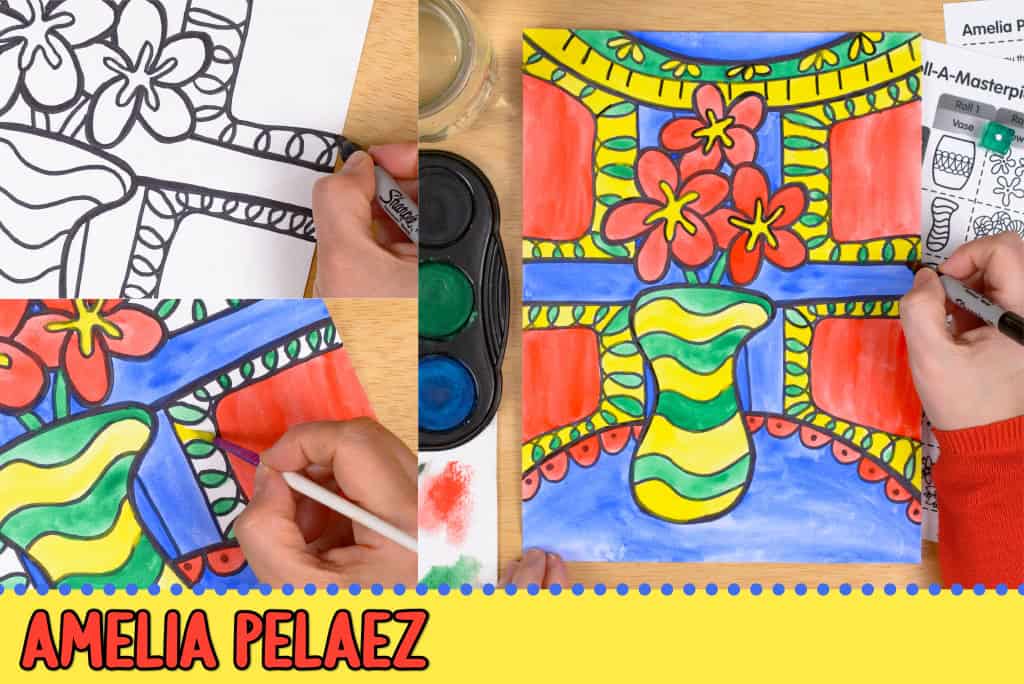
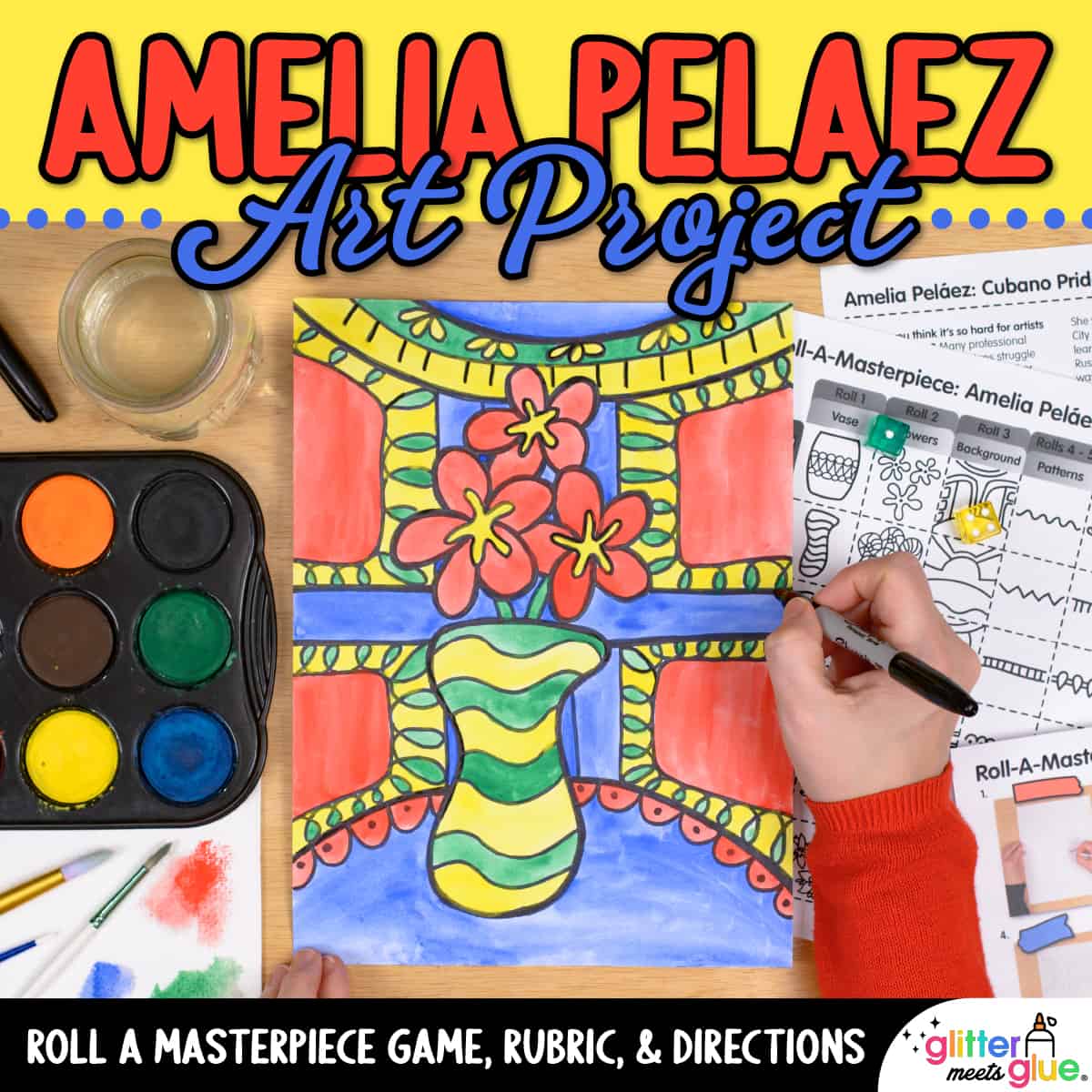
Amelia Peláez was born in Cuba and is known for vibrant, modernist works, ceramics and murals that mix ornamentation, pattern, and Hispanic architecture. Her artwork often features lively hues, decorative interiors, and Cuban flora and objects. She blended these with colonial architectural details and European modernism.
Peláez’s style is perfect for elementary Hispanic Heritage Month art projects. Her paintings mix architecture, pattern, and bright hues — all things kids can personalize. Upper elementary kids can focus on simple landscapes or still-life works. While younger children can explore color schemes like primary, secondary, warm, and cool colors.
Art Project Ideas
- Paint an expressive picture of a place students love — school, favorite hangout, or skate park. Use Peláez-style outlines and patterns to make it vibrant and decorative.
- Create a faux stained-glass window by gluing tissue paper behind cut-outs in black construction paper. Let kids choose objects that matter to them like favorite snacks, pets, or sports gear.
- Assemble a patterned collage inspired by tile work. Encourage children to include figures or logos that connect to their own culture, hobbies, or favorite brands.
4. Victoria Villasana
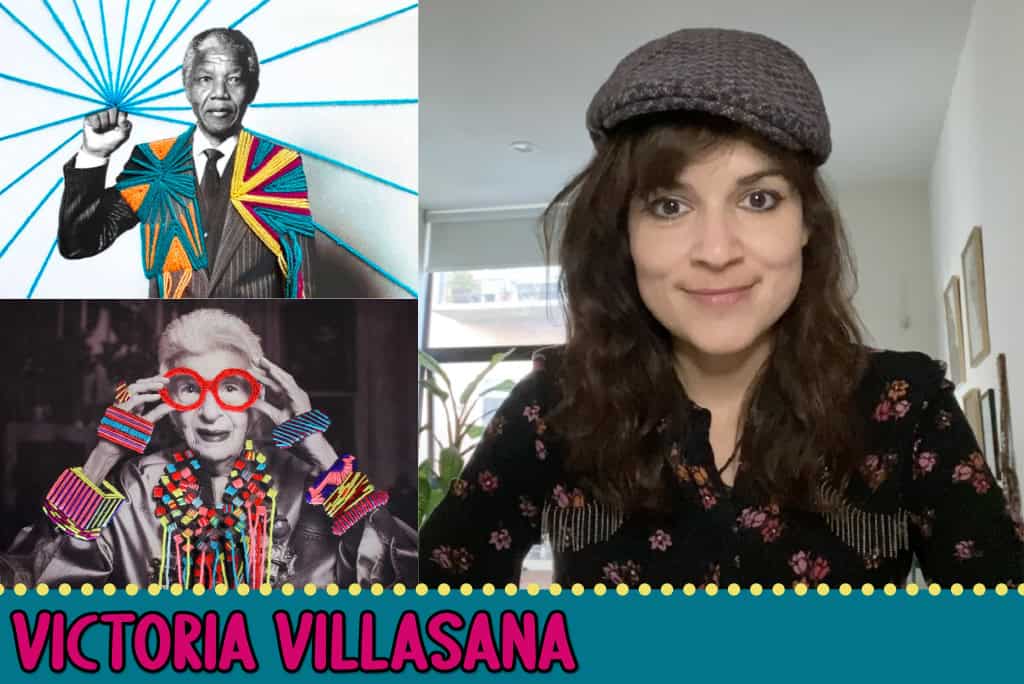
Victoria Villasana is a Mexican artist known for combining photography with textiles. She often uses a rainbow of embroidery or yarn over black-and-white images to explore themes of heritage, culture, identity, and imperfection. Her pieces often leave threads visible, extending beyond the frame. This gives them a dynamic, textured, and slightly unfinished look.
I think Villasana’s artwork would appeal to middle school kids and upper elementary too. It’s tactile, visually rich, and good for discussing identity and pop culture. And very much out of the box as far as Hispanic Heritage month art projects goes.
Art Project Ideas
- Print a black-and-white photo of a celebrity, musician, or personal hero. Add colorful yarn, thread, or drawn embroidery lines to highlight their personality or message.
- Construct a portrait of a friend, family member, or favorite character. Decorate it with lines or scrap fabrics that represent their identity, mood, or story.
- Design a mixed-media collage using pop culture images like magazines, comics, or album covers. Add hand-drawn or yarn embellishments to give it a modern twist.
5. Blanka Amezkua
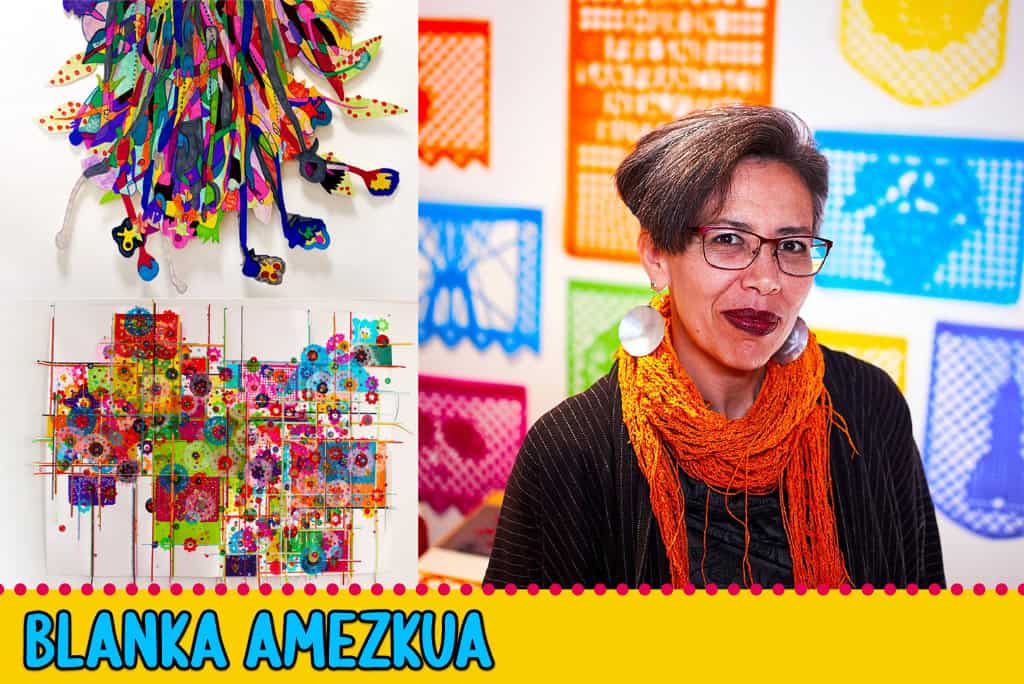
Blanka Amezkua is from Mexico City and is inspired by Hispanic folk traditions, popular culture, and everyday objects. She often works with painting, collage, and installation. In addition, she loves involving the community in her projects. She has even turned her own home into an art space. There, neighbors make art together, share meals, and exchange stories.
Amezkua’s artwork is a wonderful fit for upper elementary and middle school students, who enjoy exploring culture and working on collaborative projects.
Art Project Ideas
- Collect everyday objects and arrange them into a collaborative art piece with classmates.
- Create a collage using images from magazines mixed with folk-art patterns and radiant hues.
- Host a mini “gallery” walk where children share stories about their art with peers. This mirrors Amezkua’s community projects.
6. Pablo Picasso
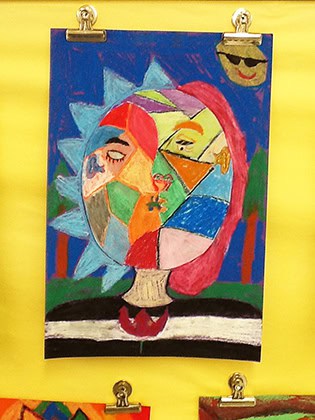
Pablo Picasso was a Hispanic painter from Spain and is considered one of the most influential 20th century artists. He composed thousands of artworks in many different styles over his long career. These included paintings, drawings, ceramics, and sculptures. Picasso is best known for co-founding Cubism, an art style that breaks objects into geometric forms to show them from many angles at once.
Picasso’s many styles work well for upper elementary. They are great for teaching kids how to break objects into shapes or experiment with portraits in a new way.
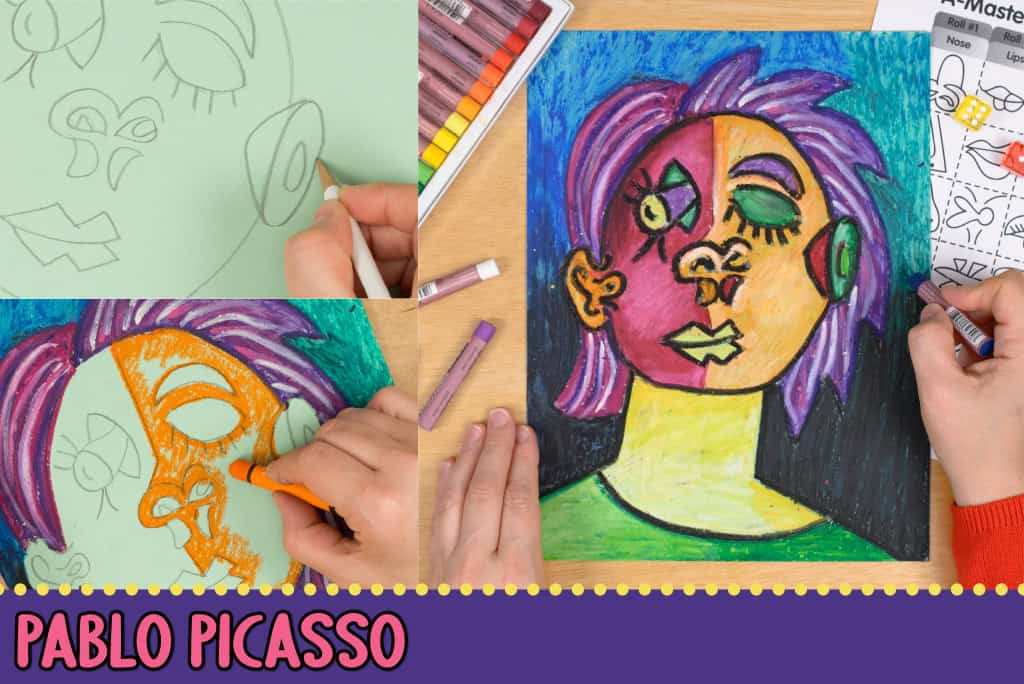
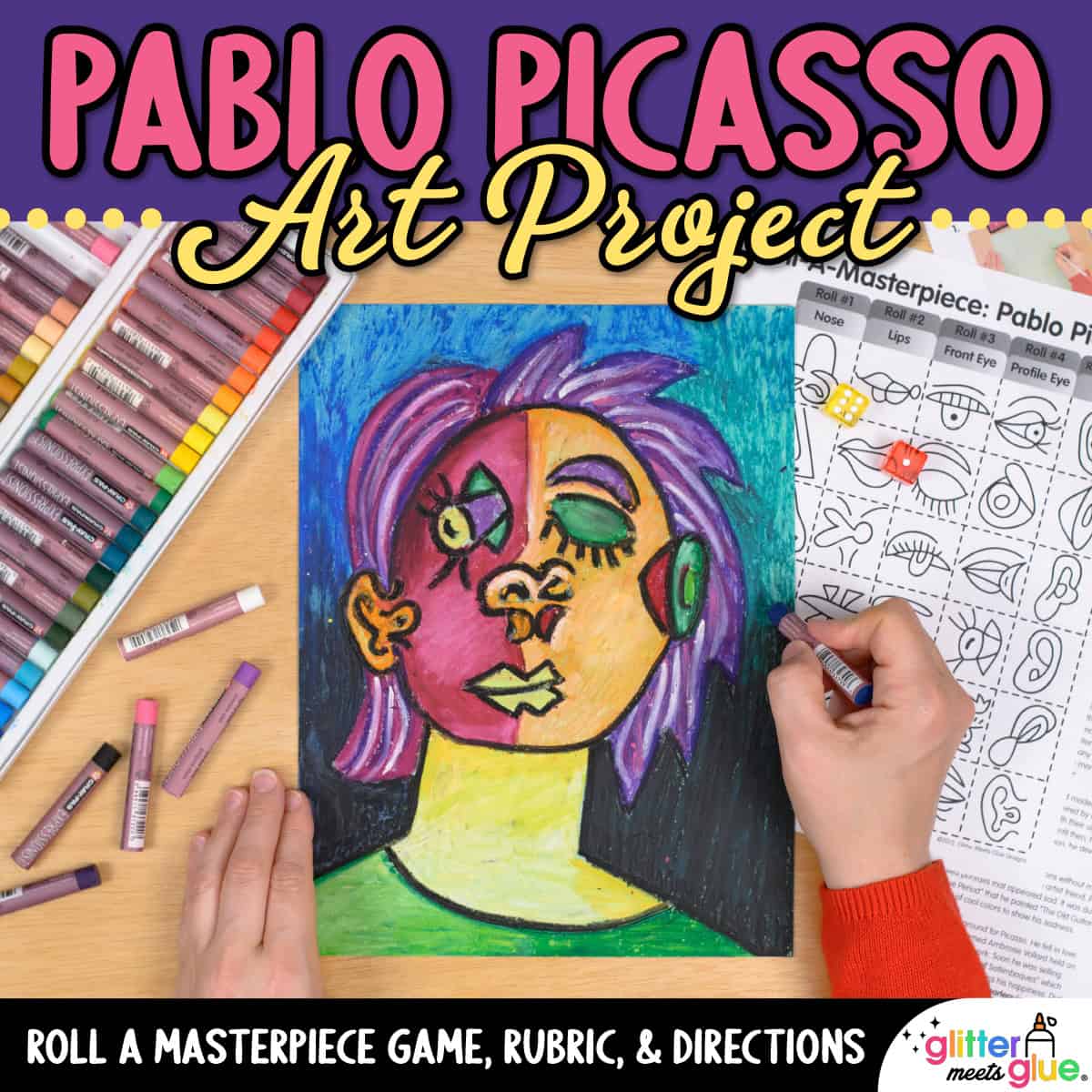
Art Project Ideas
- Cut and rearrange magazine faces to make a Cubist portrait showing multiple viewpoints at once.
- Draw a portrait in oil pastel that combines a side profile and a front view on the same face. This mimics Picasso’s signature style.
- Assemble a mixed-media still life with paper shapes inspired by Picasso’s collage techniques.
7. Carmen Herrera
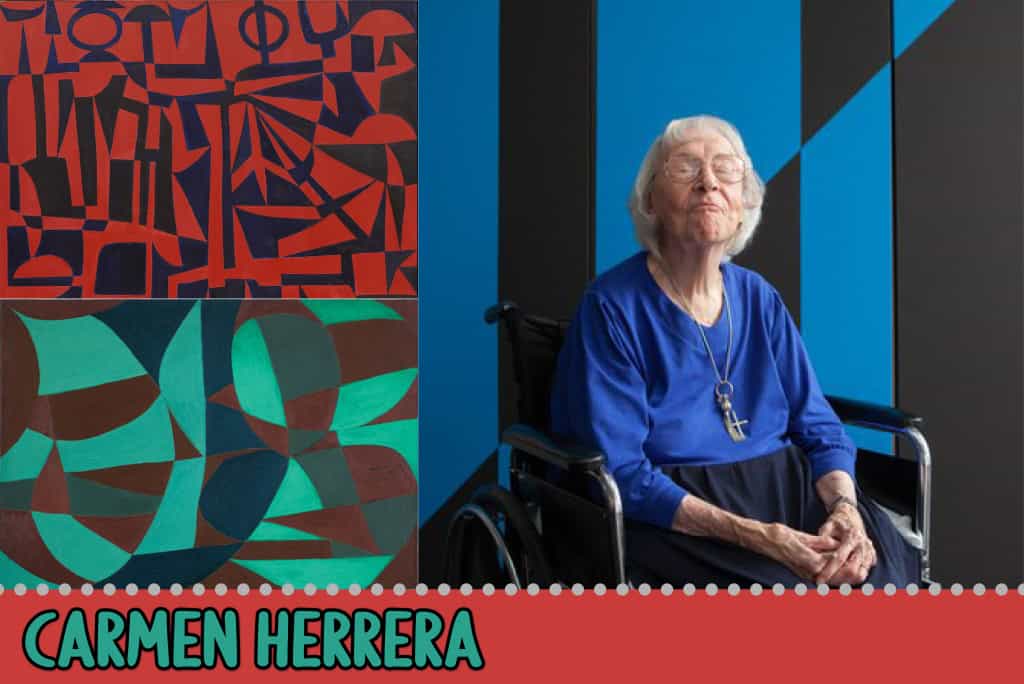
Carmen Herrera was born in Cuba and was known for clean, minimalist abstract paintings that used dramatic forms, strong lines, and blocks of pigment. Her artwork often played with geometry and simplicity. She used basic forms and color contrasts to make powerful visual statements.
Herrera’s art is best for upper elementary and middle school classes. Use it to explore form, line, and color, and to show how simple shapes can make something striking.
Art Project Ideas
- Compose a composition using only straight lines and two or three bold hues. Have students choose colors that represent their mood or personality.
- Cut and arrange large geometric shapes from colored paper. Create a minimalist design that lets kids experiment with balance and symmetry.
- Design a collaborative class mural where each child contributes one simple geometric shape. Arrange them into a shared composition that highlights variety within a strict color palette.
8. Stanley Bermudez
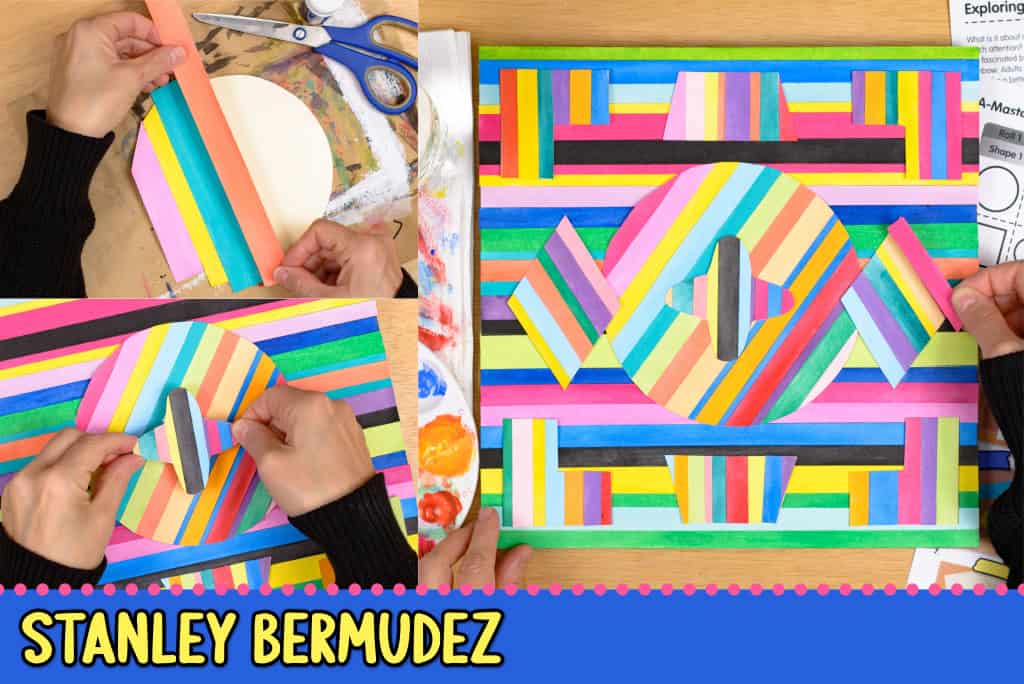
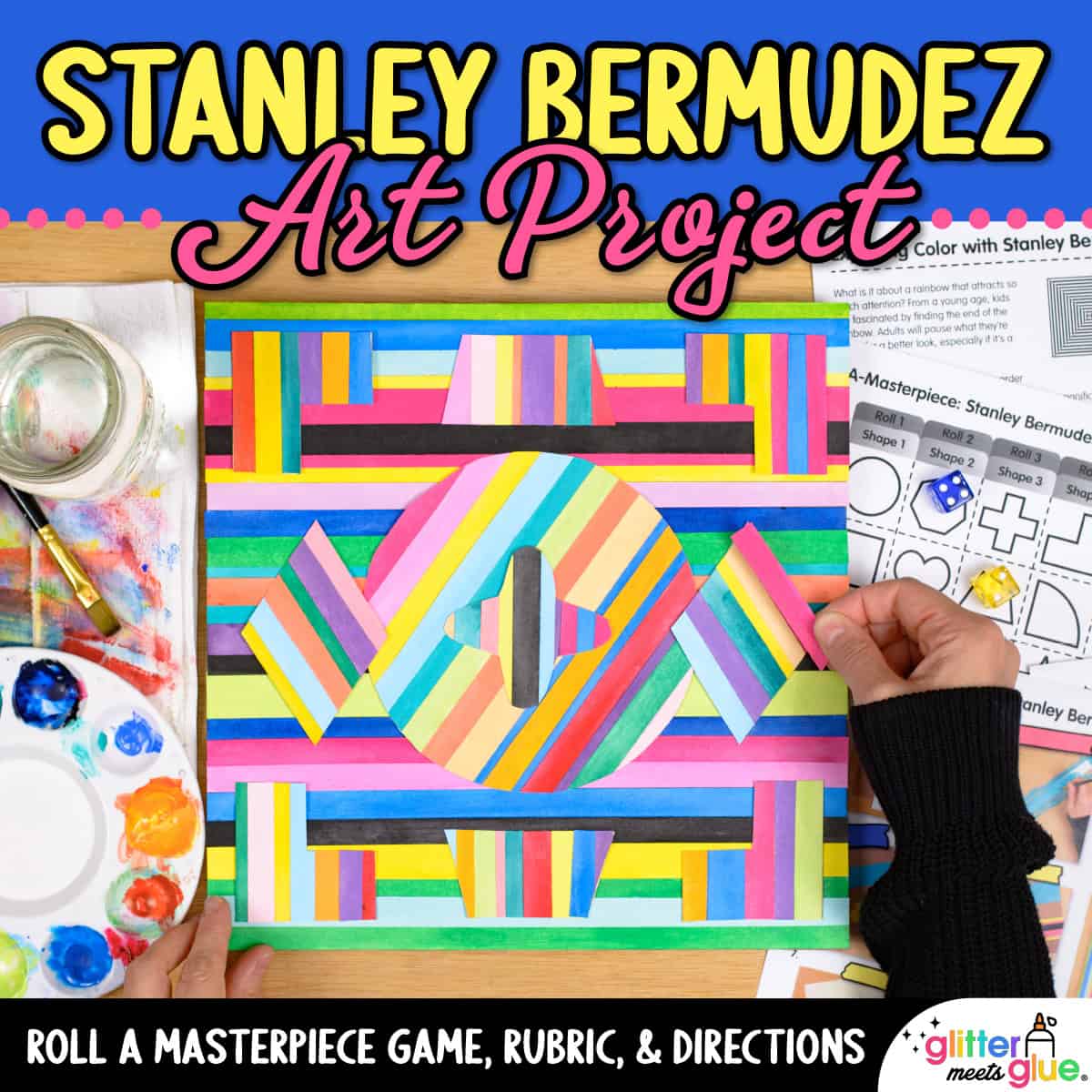
Stanley Bermudez is a Hispanic fine artist from Venezuela and is known for his radiant, hard-edge paintings that explore culture, history, and identity. His artwork often combines bright, geometric forms with portraits or symbols to talk about political and social issues. Bermudez’s art is influenced by both Latin American culture and his experiences living in the United States.
Bermudez’s art is well suited for middle school students, who can explore how color, shape, and personal imagery work together to tell a story or share a point of view. I’ve successfully done mixed media projects based on his unique style.
Art Project Ideas
- Design an abstract composition using painted paper strips of eye-catching hues and overlapping geometric shapes.
- Design a pop culture–inspired abstract painting. Have children turn a favorite character, celebrity, or object into a composition of graphic forms and color blocks.
- Assemble a series of panels that combine personal or cultural symbols with geometric color fields. Display them together as a collaborative gallery wall.
9. Fernando Botero
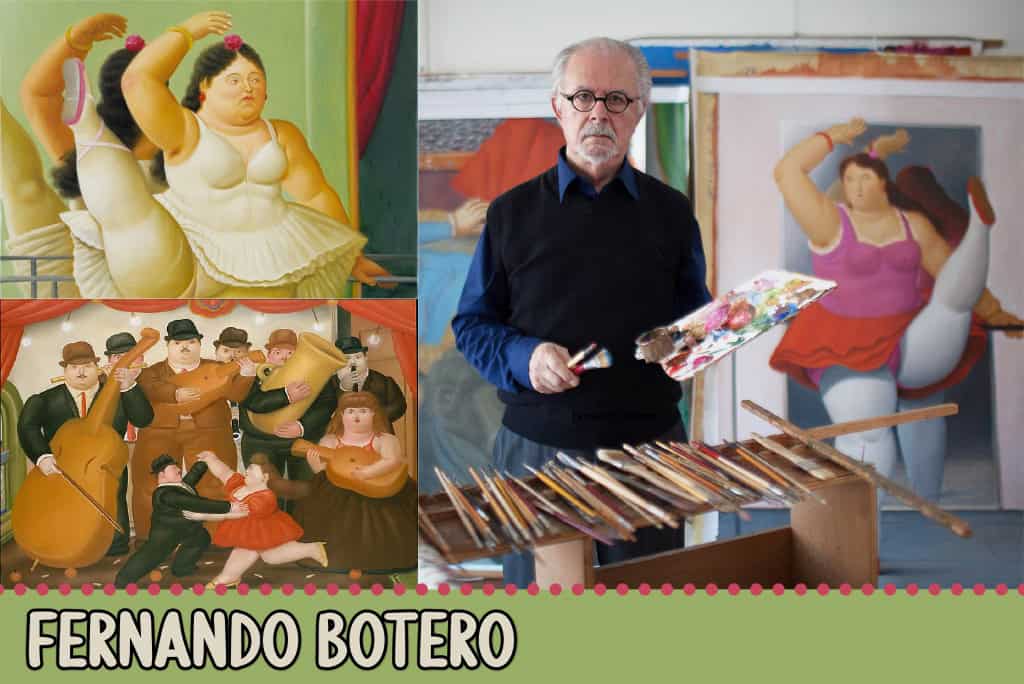
Fernando Botero was from Colombia and was famous for his paintings and sculptures of exaggerated, rounded figures (people, animals, objects) in a style often called “Boterismo.” His rotund forms could be humorous, critical, or celebratory, depending on the piece.
I feel Botero’s compositions are perfect for teaching upper elementary and middle schoolers about exaggeration in art. His figures make us notice certain details or think differently about the subject.
Art Project Ideas
- Draw a loved one, pet, or object with exaggerated, rounded proportions in Botero’s “inflated” style.
- Sculpt a clay figure with extra volume to explore how form and mass change its personality.
- Choose a pop culture character, celebrity, or icon and “Botero-ize” it by exaggerating its shape and proportions.
10. Joan Miro
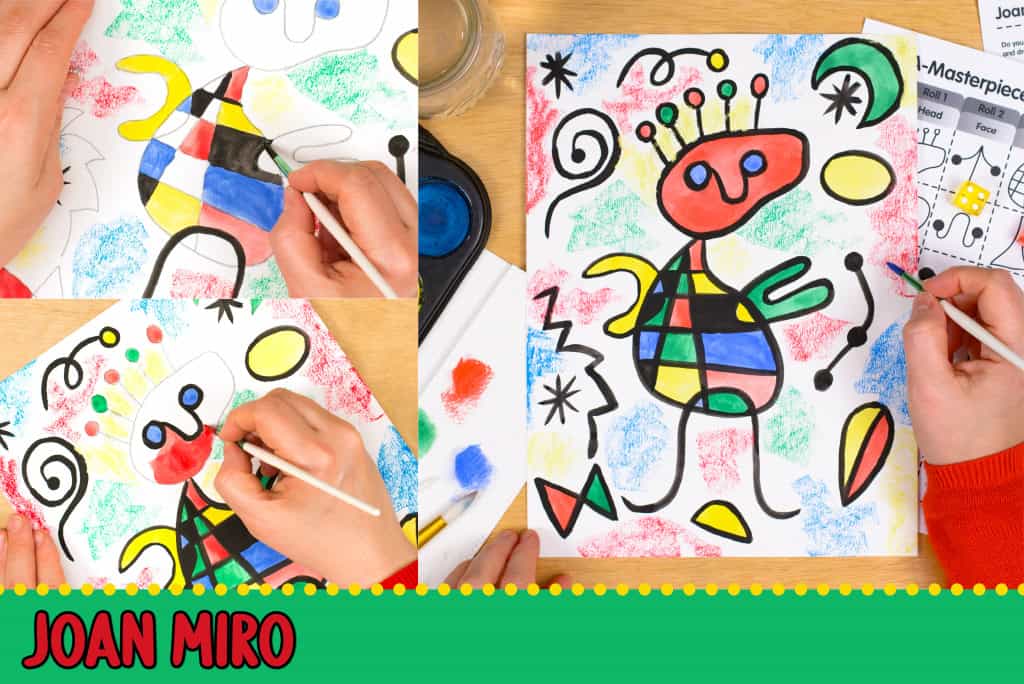
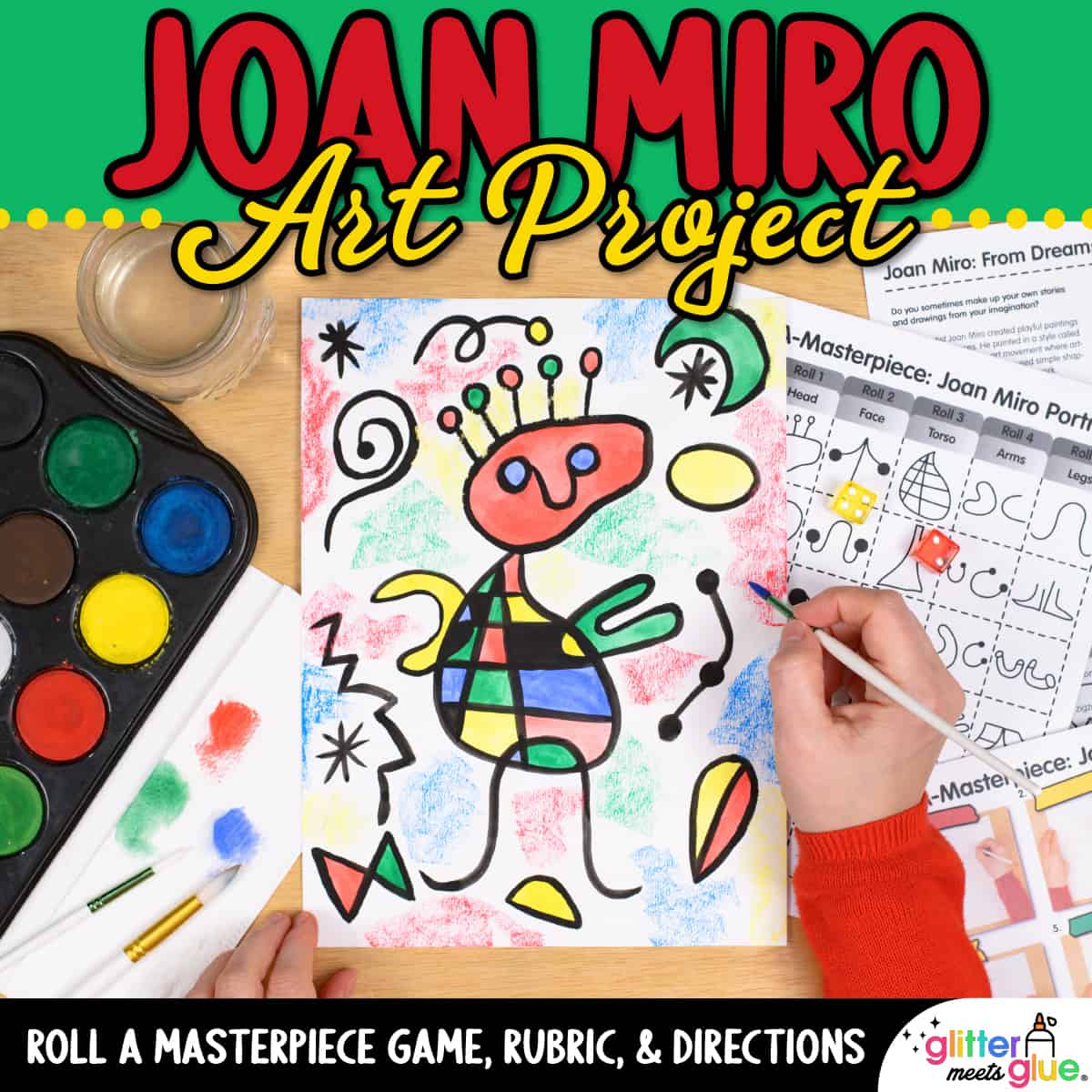
Joan Miró was a Hispanic painter from Spain and was famous for his abstract oils and gouaches full of cheerful colors, stars, moons, and playful shapes. His artwork felt dreamlike and imaginative, as though the pictures were coming from a child’s sketchbook. Miró loved to combine sharp lines with soft, floating forms to simulate a sense of motion.
I feel Miró’s playful style is a hit with all primary students who love vibrant hues and simple shapes. I’ve had success with using mixed media to create interesting elementary art projects for Hispanic Heritage Month.
Art Project Ideas
- Paint an abstract mixed-media portrait filled with stars, moons, and playful shapes. Use bright primary colors and black outlines to finish the design.
- Invent a set of whimsical creatures or characters by combining simple form and lines into imaginative forms.
- Draw a collaborative mural where each child contributes a floating shape or symbol. Combine them to build a shared “dream world” inspired by Miró.
11. Abel Barroso
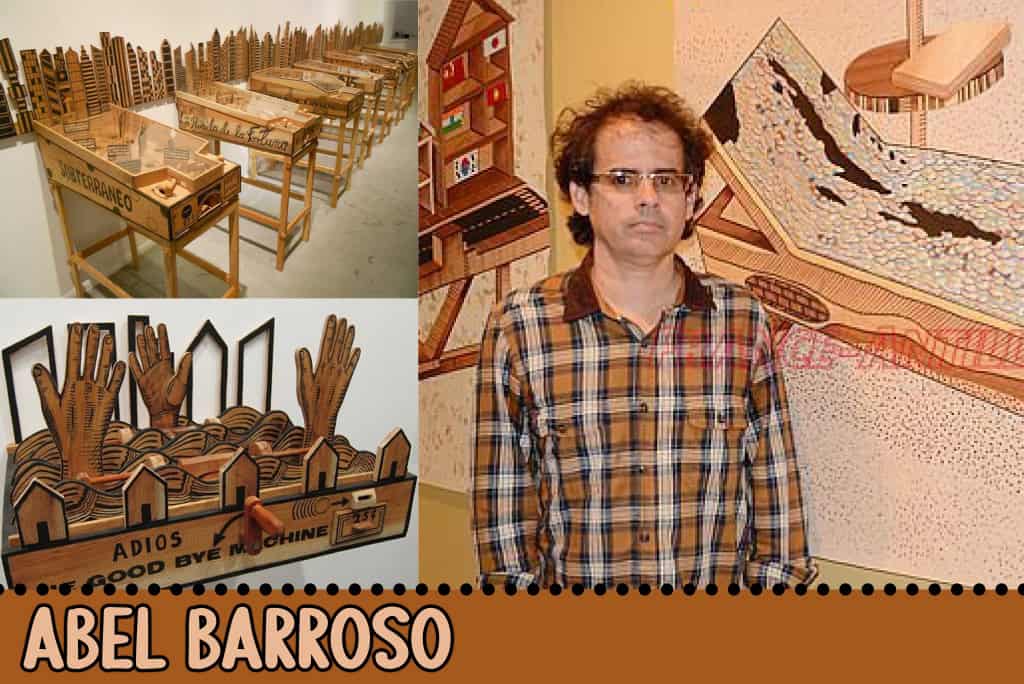
Abel Barroso is from Cuba and is best known for turning serious concepts into playful works of art. He creates woodblock prints and sculptures that talk about borders, migration, and technology. Many of his pieces are interactive, encouraging viewers to think about how we connect—or are kept apart—from each other.
Because of the themes he explores, Barroso’s sculptures are a great fit for middle school students. They are ready to think about global issues and human connections.
Art Project Ideas
- Carve simple relief prints from foam or soft linoleum to explore big concepts like community or borders.
- Construct a small 3D object from cardboard that represents travel or connection between two places.
- Design a “low-tech” phone or tablet out of cardboard. Decorate the screen with symbols or messages about how technology connects people.
12. Enrique Pichardo
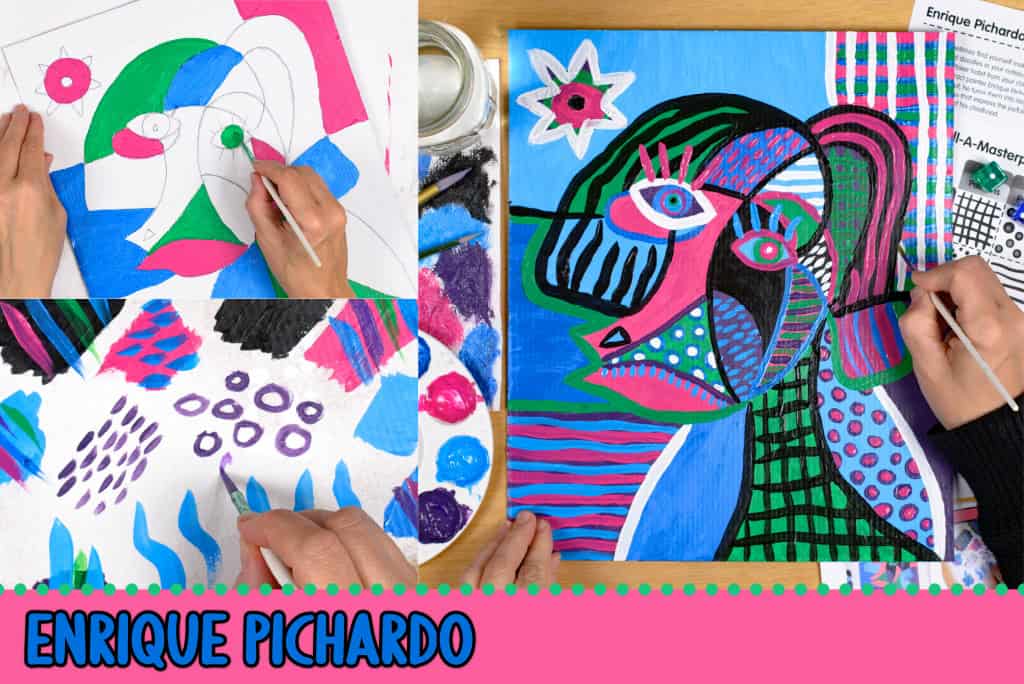
Enrique Pichardo is a Hispanic painter from Mexico and is known for vivid, colorful paintings full of playful forms and symbols. His art is inspired by his Mesoamerican roots. Pichardo also looks towards European artists like Miro, Picasso, and Klee. Many of his paintings mix bold patterns with hidden meaning.
Pichardo’s lively use of color and pattern works well for all elementary grades. Middle school kids can dig deeper into the cultural symbols in his paintings.
Art Project Ideas
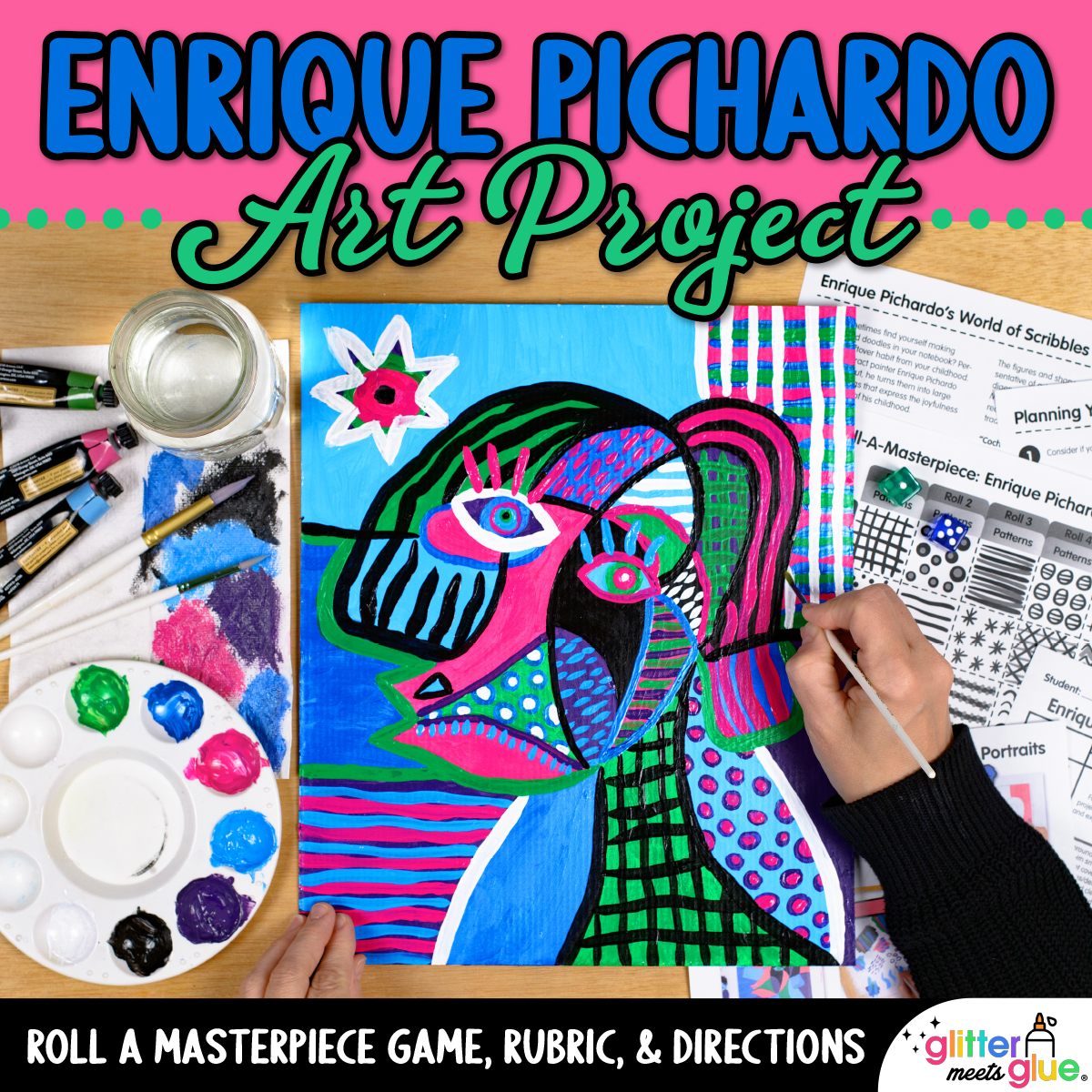
- Draw a series of abstract faces using one continuous line. Encourage kids to let the line wander and overlap as they draw expressive shapes. Then use acrylics to complete it.
- Paint an abstract portrait in bright colors and playful shapes inspired by Pichardo’s artwork.
- Layer patterns and images in a mixed-media piece to tell a story or capture a personal memory.
13. Ana Tiscornia
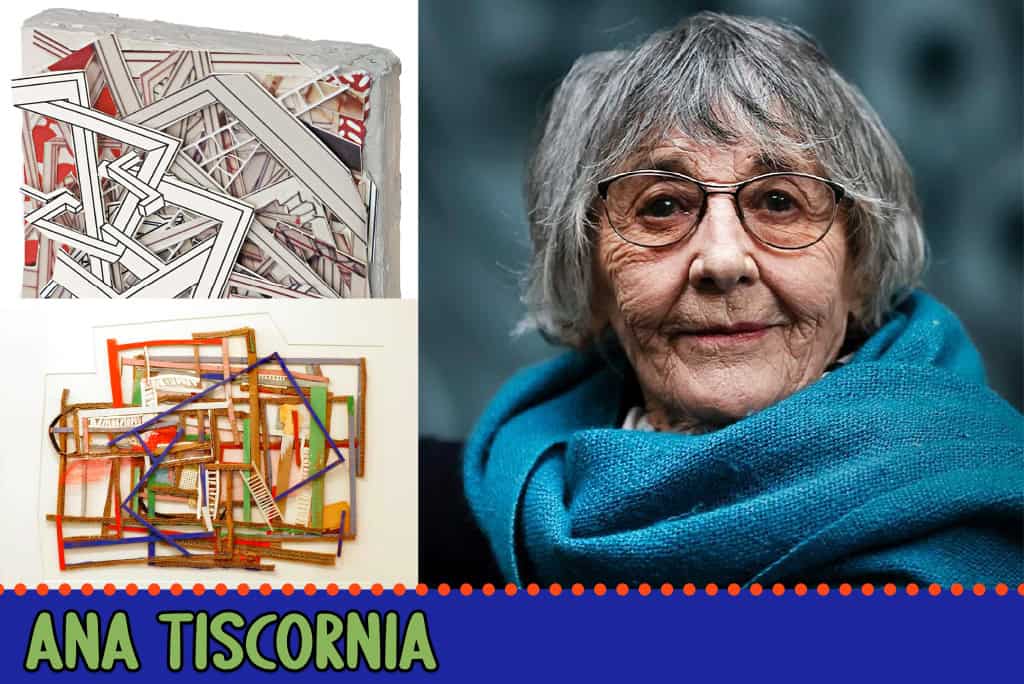
Ana Tiscornia is from Uruguay and creates art that explores memory, identity, and space. Her sculptures often looks like pieces of architecture or maps that have been taken apart and rearranged. She uses painting, printmaking, and sculpture to show how we remember places. Her art also explores how moving from one place to another changes us.
Tiscornia’s conceptual artwork is best suited for middle school students, who can reflect on concepts such as place, memory, and belonging. And who might have a better skillset for arranging and gluing many layers of pieces as she does.
Art Project Ideas
- Create a collage that reimagines your school or neighborhood. Cut apart and rearrange buildings, maps, and pathways to build the new design.
- Build a 3D paper sculpture using figuress that represent important places in childrens’ lives.
- Draw a one-point or isometric perspective cityscape. Cut apart the drawing and rearrange the pieces to create an abstract composition.
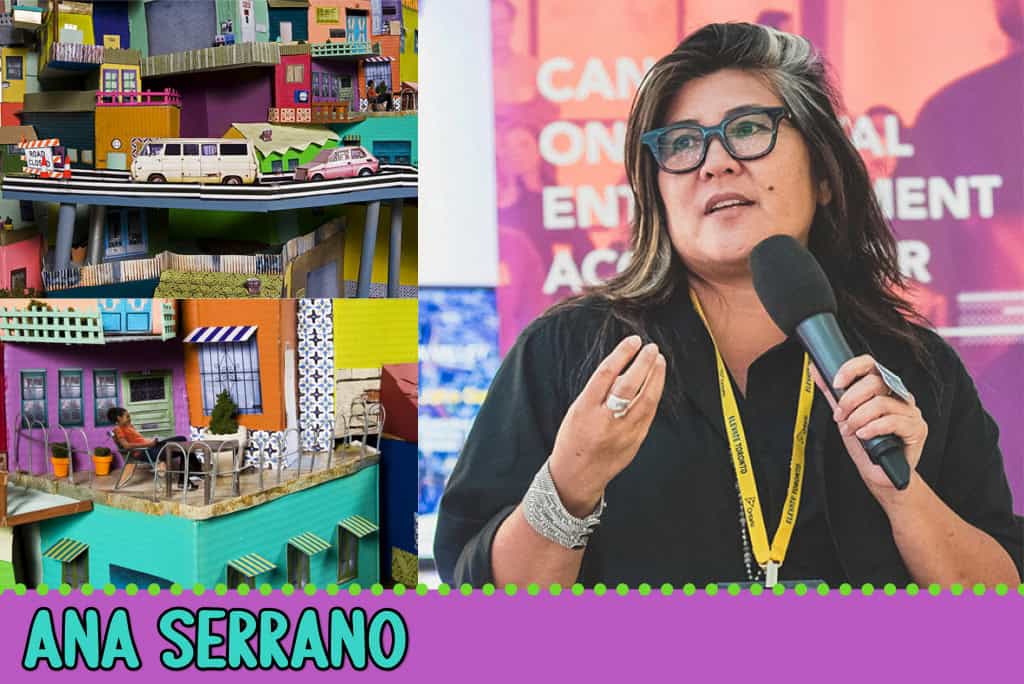
14. Ana Serrano
Ana Serrano is a first-generation Mexican-American artist from Los Angeles. She is known for building colorful, small architectural sculptures and cityscapes. She uses cardboard, acrylics, and other everyday materials. Her art celebrates the creativity and character of urban neighborhoods.
Serrano’s art is especially engaging for upper elementary kids. They can build simpler versions using familiar materials and themes.
Art Project Ideas
- Construct the facades of houses or buildings. Use acrylics or temperas to design colorful patterns and details.
- Collaboratively assemble a large cardboard town or city. Each student contributes one building to represent the community helpers in their neighborhood.
- Draw a favorite building and add imaginative elements like signs, plants, or murals to make it unique.
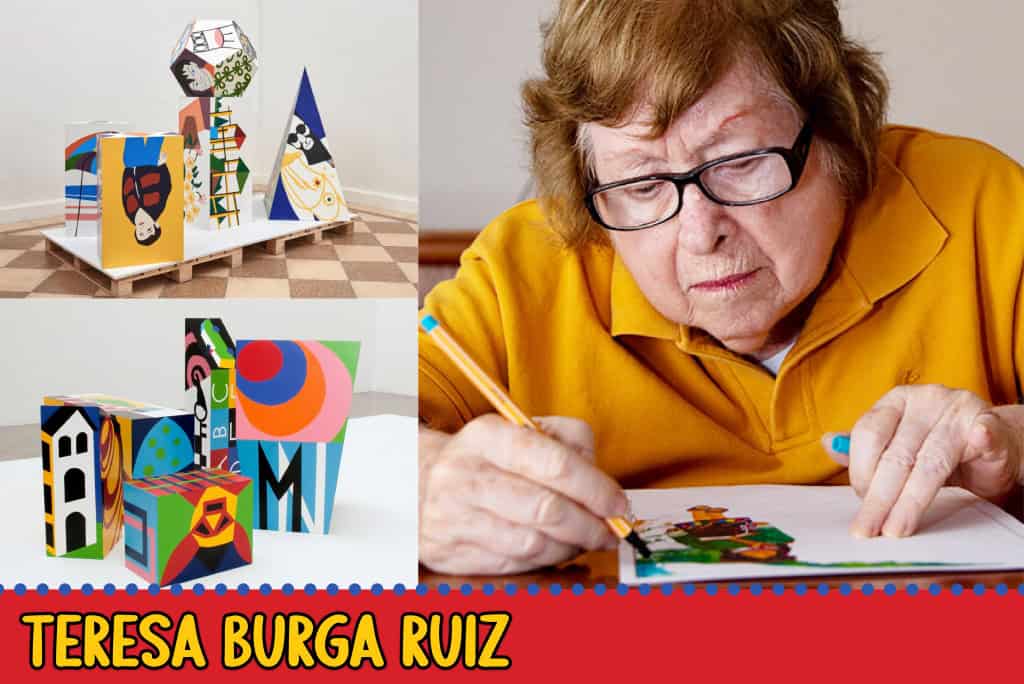
15. Teresa Burga Ruiz
Teresa Burga Ruiz was a Hispanic sculptor from Peru and was known for her experimental art — mixed media, installations, and works that question everyday life, systems, identity, and how information or structures shape us. She used geometry, info, diagrams, and conceptual pieces.
Her experimental style is best for middle school kids, who can handle abstraction and more conceptual thinking. But I can also see a modified version of her blocks being a great art lesson for lower elementary.
Art Project Ideas
- Build cube-shaped paper blocks. Paint each side with brilliant colors and patterns, and simple icons. Rearrange the blocks into different combinations to create new designs.
- Make a mixed-media collage that uses numbers, shapes, or charts to tell a story about identity.
- Develop a series of drawings that break a portrait or object into data-like parts and labels.
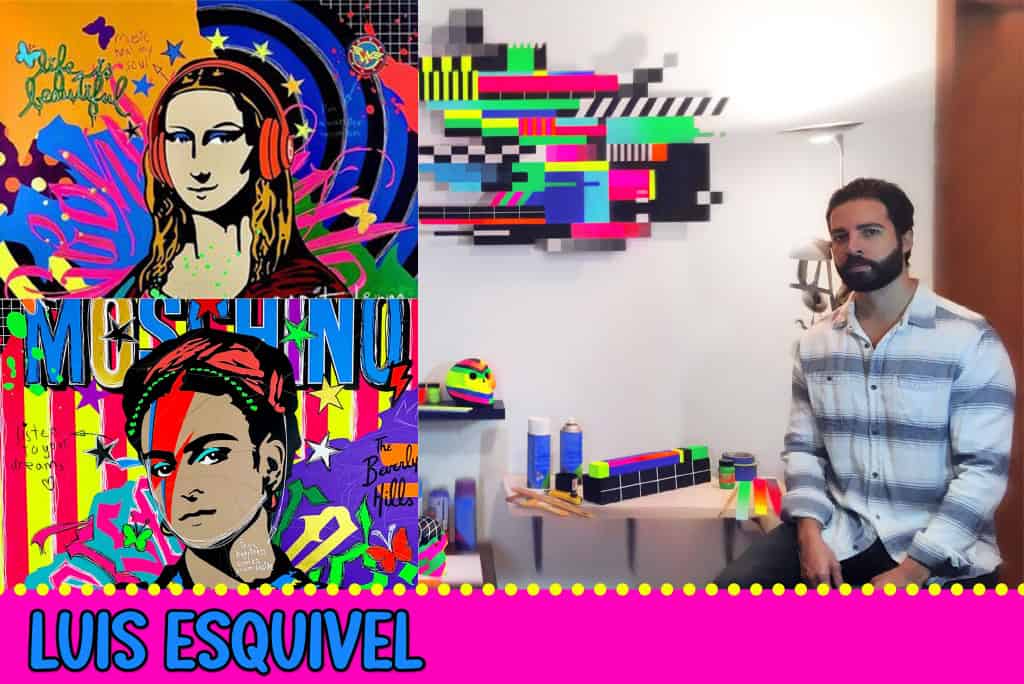
16. Luis Esquivel
Luis Esquivel is a Hispanic artist from Mexico and is known for pop-art portraits that remix celebrities, classic cartoons, fashion logos, and music references. His sculptures and digital works use neon hues, bold outlines, layered patterns, and hand-lettered words to compose high-energy, graphic images.
Esquivel’s art is a good fit for middle school, where students can appreciate fantasy plus symbolism, and experiment more freely with imaginative composition.
Art Project Ideas
- Design a pop-art portrait that remixes a public-domain image or an original photo. Use neon colors, strong outlines, and hand-lettered words to finish the look.
- Create an original cartoon character in a flat, high-contrast palette. Layer patterns, symbols, and onomatopoeia around it to make the design pop.
- Build a “brand mash” poster using invented logos and slogans. Use markers and collage to comment on trends or consumer culture.
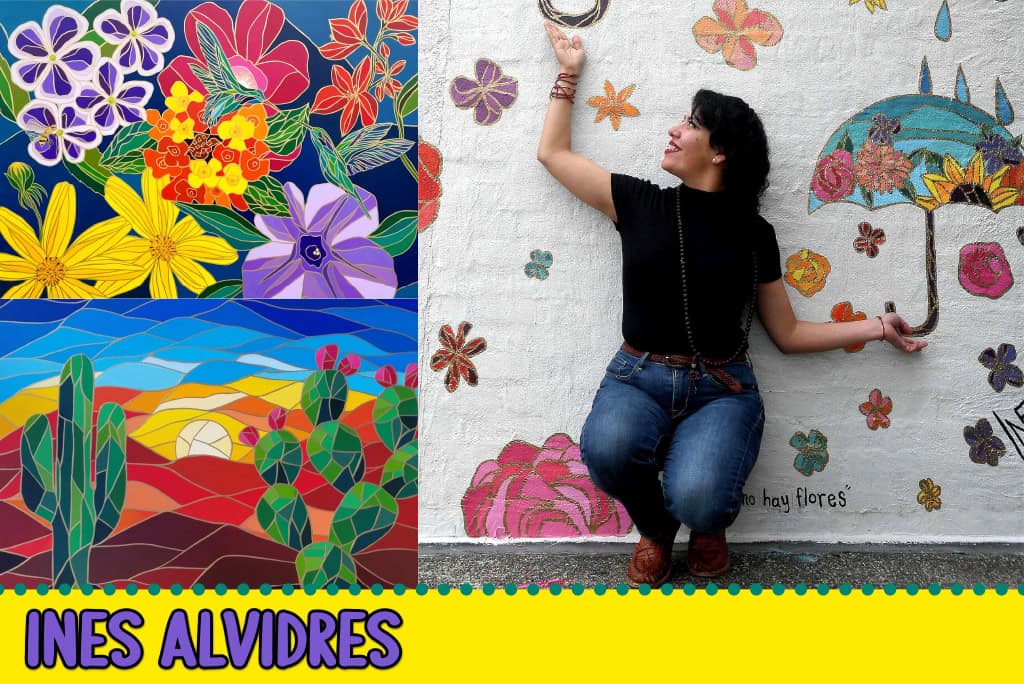
17. Ines Alvidres
Inés Alvidres is from Chihuahua, Mexico. She creates “friendly abstract” art filled with bright hues, forms, and emotion, often inspired by the people, culture, and landscapes of her childhood among the Tarahumara, the Indigenous people of northern Mexico, and her experiences after moving to the U.S.
Alvidres’ art works well for elementary and middle school kids, who can appreciate both the visual joy of color and shape and also explore how an artist’s background shapes what they make.
Art Project Ideas
- Compose a colorful desert landscape featuring cacti or bright flowers. Encourage students to choose plants from their own environment and use vivid, expressive colors.
- Layer bright oil pastels over a painted or blended background. Scratch floral or abstract patterns into the surface to create a vibrant sgraffito design.
- Design a collaborative mural where each kids contributes a shape, plant, or pattern inspired by their cultural background or personal experiences. Combine them into a colorful, shared abstract work.
If you only have one class period, you can still make a meaningful project. Here are some Hispanic Heritage Month art projects that work in 40–50 minutes:
-
Luis Esquivel Pop Art Portraits: Take quick black-and-white photos of students, print them, and let kids decorate them with neon markers, bold outlines, patterns, and words.
-
Joan Miró Abstract Drawings: Use markers or crayons to draw floating shapes, stars, and playful lines to build a dreamlike scene.
-
Pablo Picasso Half-Face Portraits: Draw a profile on one side of the paper and a front-facing portrait on the other, trace with Sharpie, and color with crayons or markers.
-
Fernando Llort Folk Art Animals: Draw a favorite animal or plant in Llort’s simple, bold style and color it with crayons or markers.
-
Amelia Peláez Tissue Paper Windows: Glue colorful tissue paper behind a pre-cut black paper “window frame” to make a bright faux stained-glass design.
-
Marta Minujín Neon Sketches: Use black paper and fluorescent pastels to sketch favorite places or objects so they look like they glow.
-
Quick Cultural Crafts (Optional): Paper plate suns, simple paper molas, or mini Ojos de Dios are fast options if you want a traditional craft.
These one-day projects keep things simple while introducing students to meaningful artists and encouraging personal expression.
There are many wonderful Hispanic artists you can introduce to your students, but I like to focus on a mix of contemporary voices that kids connect with. Here are some of my favorites to share during Hispanic Heritage Month:
-
Fernando Llort (El Salvador): Known for joyful folk-art style paintings and community murals.
-
Marta Minujín (Argentina): Famous for colorful, interactive installations and pop-art inspired events.
-
Amelia Peláez (Cuba): Combined Cuban architecture, pattern, and bright color into modernist paintings.
-
Victoria Villasana (Mexico): Adds colorful embroidery to black-and-white photos, mixing old and new.
-
Blanka Amezkua (Mexico): Uses painting, collage, and community participation to create collaborative art.
-
Pablo Picasso (Spain): Co-founded Cubism and created thousands of works in many different styles.
-
Carmen Herrera (Cuba): Created striking minimalist paintings with bold geometric forms.
-
Stanley Bermudez (Venezuela): Uses hard-edge painting and bright color to explore culture and identity.
-
Fernando Botero (Colombia): Known for paintings and sculptures of round, exaggerated figures.
-
Joan Miró (Spain): Filled his paintings with playful stars, moons, and floating shapes.
-
Abel Barroso (Cuba): Creates interactive sculptures and prints about borders, migration, and technology.
-
Enrique Pichardo (Mexico): Combines color, pattern, and symbols inspired by pre-Hispanic culture.
-
Ana Tiscornia (Uruguay): Explores memory and space with architectural and map-like artworks.
-
Ana Serrano (USA/Mexico): Builds colorful cardboard cityscapes inspired by her Los Angeles neighborhood.
-
Teresa Burga Ruiz (Peru): Uses geometry, charts, and diagrams to make conceptual art.
-
Luis Esquivel (Mexico): Paints pop culture icons, cartoons, and logos in a neon, graphic style.
-
Inés Alvidres (Mexico): Creates “friendly abstract” paintings full of bright colors and shapes inspired by her childhood in Chihuahua.
Each of these artists can inspire projects that are colorful, personal, and meaningful — and many can be adapted for both elementary and middle school.
The key is to move beyond one-off crafts and give students a chance to connect personally with the art and artists. Here are a few ways to make Hispanic Heritage Month projects more meaningful:
-
Share the work of contemporary Hispanic artists so students see how living artists use color, pattern, and symbolism to tell stories.
-
Let them pick a subject, color palette, or symbol that reflects their life, interests, or culture. Every lesson doesn’t have to be about mimicking someone else’s art.
-
Talk about why the artist made the work — and ask students what message or feeling they want their own piece to share.
-
Include artists from different countries, backgrounds, and styles so kids see that Hispanic art isn’t just from one or two countries.
When students see their own culture, interests, or personality reflected in what they make, the project becomes more than just a fun activity. It becomes a way to express who they are!
Middle schoolers are ready for projects that go a little deeper and let them make personal choices. Here are some Hispanic Heritage Month art projects that work well for grades 6–8:
-
Luis Esquivel Pop Art Portraits: Students remix their own photo with neon colors, bold outlines, and patterns to create a high-energy portrait that reflects their personality.
-
Victoria Villasana Photo Embroidery: Print black-and-white photos and let students add yarn, thread, or drawn embroidery lines to highlight themes of identity and heritage.
-
Stanley Bermudez Symbol Panels: Have students design panels that mix cultural symbols with geometric color fields, then hang them together as a collaborative wall display.
-
Marta Minujín Neon Murals: Work as a class to make a glowing mural on black paper using fluorescent pastels.
-
Pablo Picasso Half-Face Portraits: Teach students about Cubism by having them combine a profile and front view in one portrait, then add bold color with oil pastels.
-
Abel Barroso Low-Tech Devices: Build cardboard “phones” or “tablets” and decorate them with drawings or messages about connection and communication.
These projects balance fun with depth, encouraging middle schoolers to explore identity, symbolism, and culture — all while giving them room to make the art their own.
Elementary students do best with projects that use simple shapes, bright colors, and easy-to-follow steps — but still let them be creative. Here are some Hispanic Heritage Month art projects that work well for grades K–5:
-
Fernando Llort Folk Art Birds: Students draw simple animals, plants, or houses using bold outlines and fill them with bright colors.
-
Joan Miró Shape Drawings: Use crayons or markers to draw floating stars, moons, and playful lines to create a dreamlike scene.
-
Amelia Peláez Tissue Paper Windows: Pre-cut black construction paper frames and let kids glue tissue paper squares to make a stained-glass effect.
-
Ana Serrano Cardboard Buildings: Have each student make a small, colorful building to combine into a class cityscape.
-
Marta Minujín Neon Doodles: Draw favorite foods, pets, or objects on black paper with fluorescent pastels so they look like they glow.
-
Quick Crafts: Paper plate suns, simple molas, or mini Ojos de Dios are fast and engaging for younger students.
These projects keep things age-appropriate while introducing students to real Hispanic artists and giving them freedom to personalize their work.
Bringing Hispanic Heritage Month Artists Into the Art Room Year-Round
Including Hispanic art in your elementary and middle school lessons helps students see that modern art comes from many places and points of view. This list of artists includes names from Mexico, Cuba, El Salvador, Argentina, Spain, and Colombia. It gives kids a chance to experience many voices, styles, and stories.
Whether you use one or all of these Hispanic Heritage Month art projects, they’re perfect for elementary and middle school and work any time of year. They give kids space to connect with culture, try out bold techniques, and make art that feels personal and meaningful. Use them during September or any time of year to bring Hispanic heritage art and culture into the classroom.
Thank you for sharing my work! I am so honored!
We opened a show last night at Wave Hill House if you’d like to come and see it:
https://www.wavehill.org/calendar/blanka-amezkua-power-flower-curative-flora
and there’s this too:
Meet the Artist: Blanka Amezkua
Sat, Oct 25, 2025, 12:30-1:30 PM
Location: Mark Twain Room