Over the last few years, there’s been growing concern among teachers about generative AI content showing up in teacher-created resources. Like a lot of teachers, I’ve noticed a real increase in low-effort, AI-generated material on the popular education marketplaces. There’s a clear divide among teachers about whether AI belongs in this work at all. So I wanted to take a minute and lay out exactly where I stand with my AI policy for Glitter Meets Glue.
How I Create My Art Resources
I do not use generative AI to write, design, lay out, or illustrate my art teacher resources. You won’t find worksheets from me that were churned out by an automated system. My resources don’t have those too-perfect stock photos. Nor do they have arched ribbons with text overlays, random icons, or those three little action lines to emphasize words. If you know, you know.
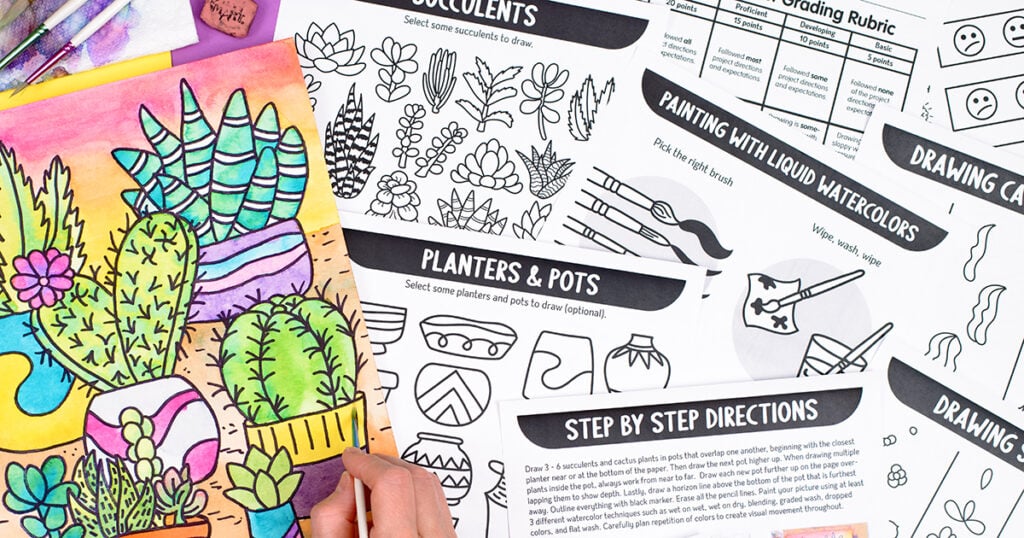
To be clear, I write every word of my own content myself. No matter how long it takes, it’s always my own thoughts. And that’s whether I’m writing an artist biography or a lesson plan. The AI versions I see are shallow, full of generic phrasing, and sometimes just plain wrong on the facts.
For every artist biography I write, I read from credible sources, listen to podcasts, and watch in-depth videos. I do this so I can check and cross-check the historical details before they go in.
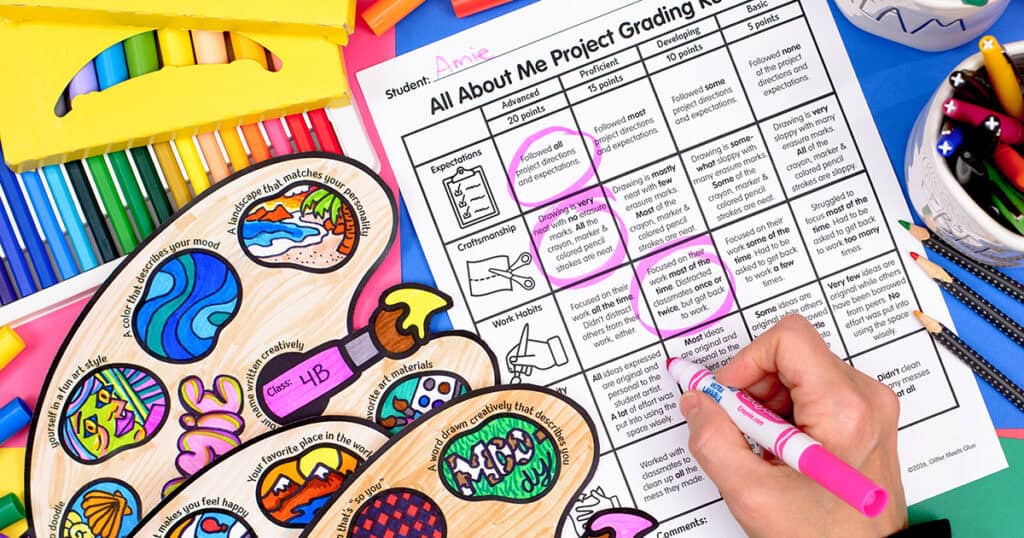
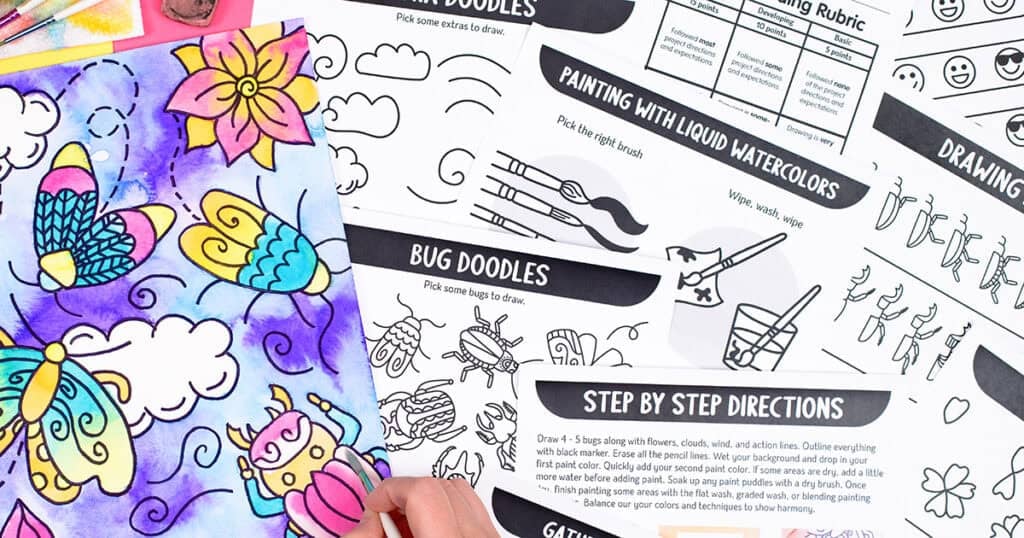
I photograph my own resources for covers, thumbnails, and previews using a DSLR camera. And I take all the photos in my step-by-step handouts and PowerPoint files too.
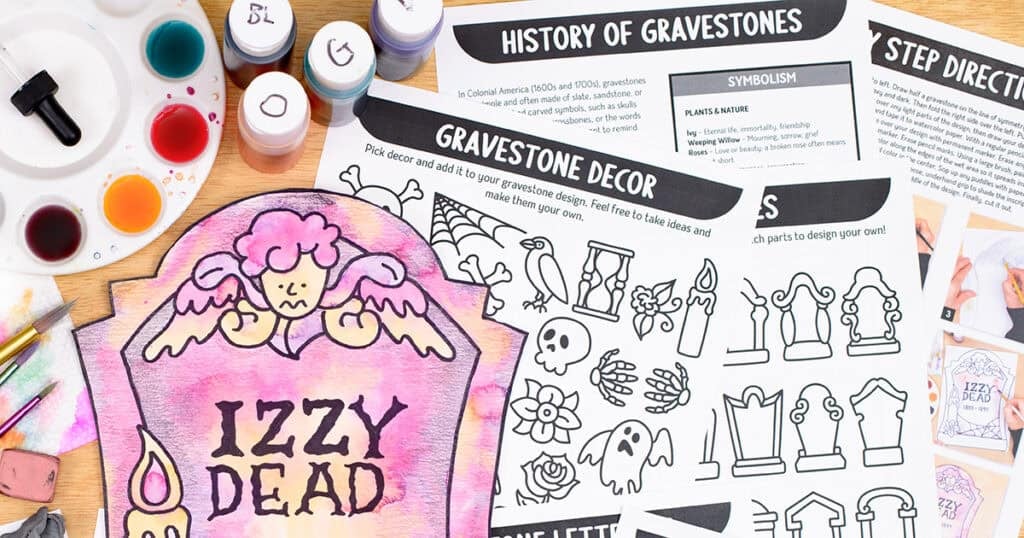
I hand-draw all my own illustrations on my old school drawing tablet. That includes all the graphics in my worksheets and slide decks.
Additionally, I lay out all my own photos, illustrations, and text myself using industry-leading graphic design software. My school sent me to study graphic design back in my second year of teaching. And I’ve been using those skills for over two decades now. That hasn’t changed.
How I Use AI in a Limited Capacity
That said, here’s where AI does come into my process, in a very limited way:
- I’ll sometimes type up step by step project directions and ask AI to check if they’re clear and concise. That’s because I have a habit of making the simplest things sound way more complicated than they need to be. It’s good at identifying what isn’t important in my writing or what needs to be better emphasized. But even then, I always rewrite it so it comes from me.
- I’ll occasionally ask it to point me toward credible websites for biographical information and artwork. A regular Google search doesn’t always surface what I need.
Beyond that, nothing AI-generated ends up on the pages of my resources. I have never and will never ask AI to whip me up worksheets, slide decks, handouts, etc. I draw, write, and lay out everything on my own. Hence the need to articulate my AI policy so you know where I stand on things.
Why I Will Not Be Creating AI Slop for Art Teachers
I’ve created hundreds of educational materials for commercial use since October of 2012. I don’t need to hand off my own thinking to a machine to make great resources for art teachers. With my 20 years of teaching as well as a certification in graphic design, I”ve got experience on my side. I understand good pedagogy. Unlike AI which has never taught anything ever.
I design human-made art projects, lesson plans, bulletin board kits, crafts, and sub plans for art teachers. None of that involves opening ChatGPT, Claude, or Canva and asking it to spit out a worksheet or slide deck for me.
I think this AI policy is what sets my resources apart from the mass-produced, generic, and often inaccurate AI content flooding teacher marketplaces right now. And for all the reasons I’ve stated, I hope you’ll consider me a worthy source of authentic, teacher-created art teaching materials going forward.