


Color Wheel Spinner Worksheets
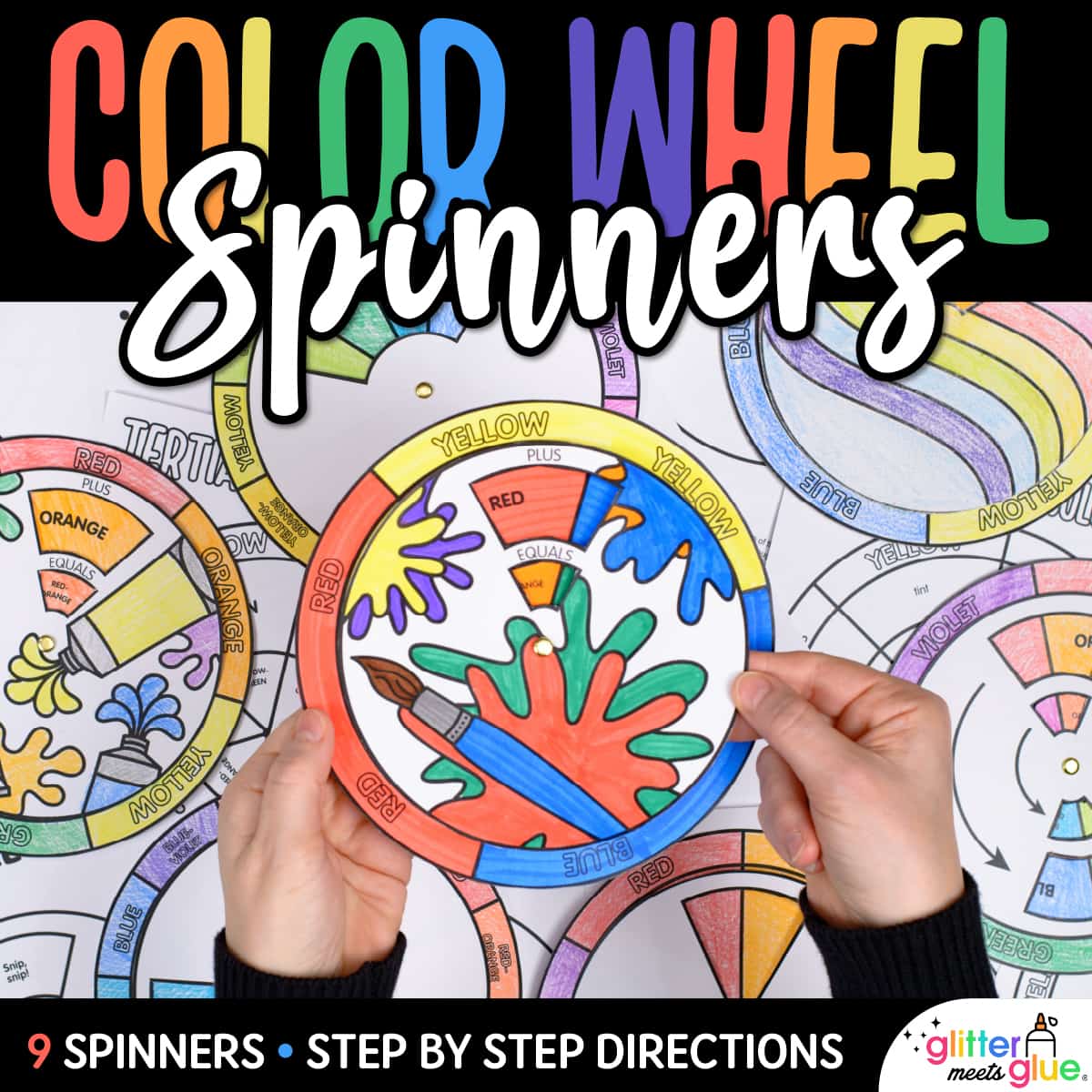
Are your elementary and middle school art classes bored learning color theory and the color wheel? If so, these engaging, interactive color wheel spinner templates will help. They include seven different color schemes, and you can use the worksheets alongside your own color theory art projects to reinforce learning.
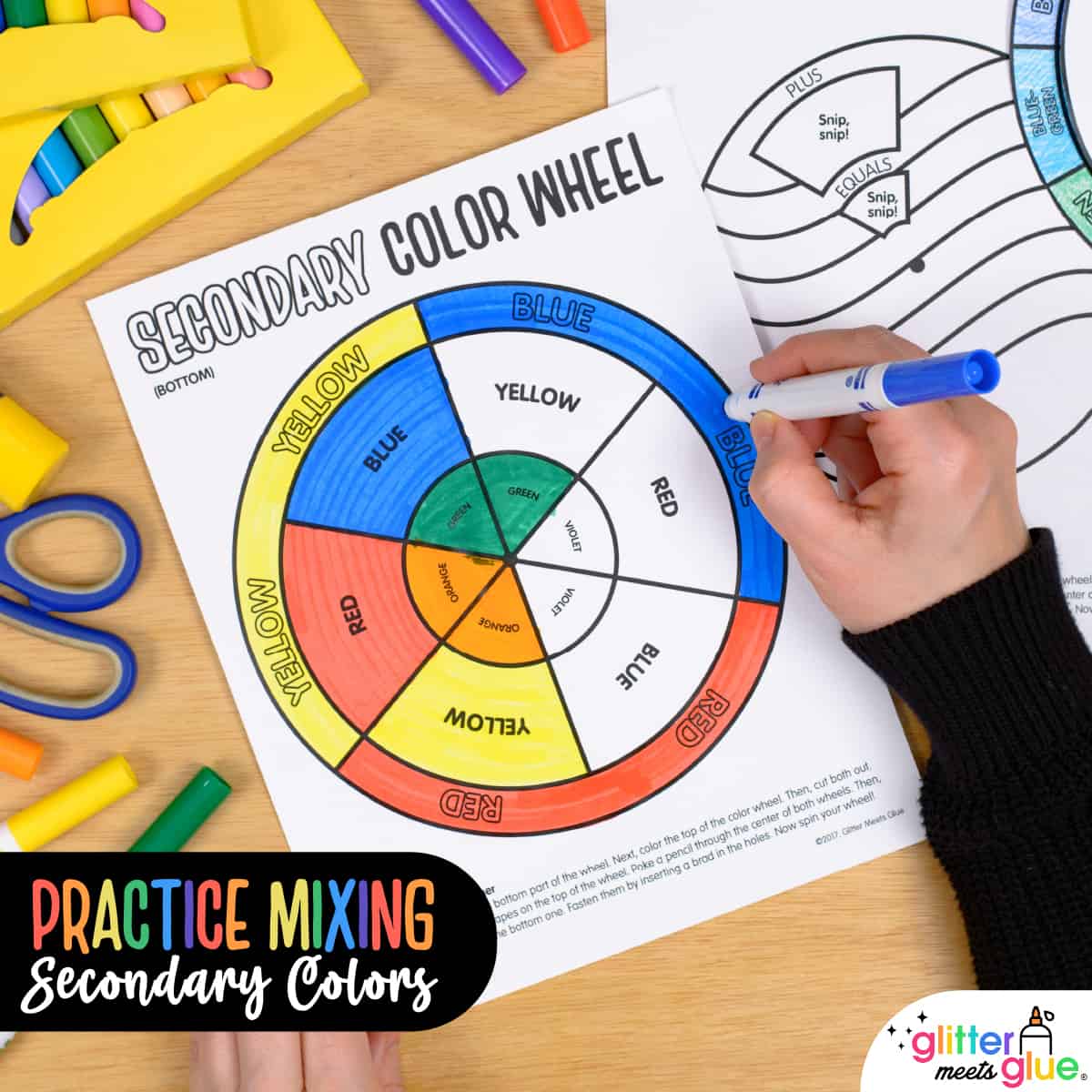
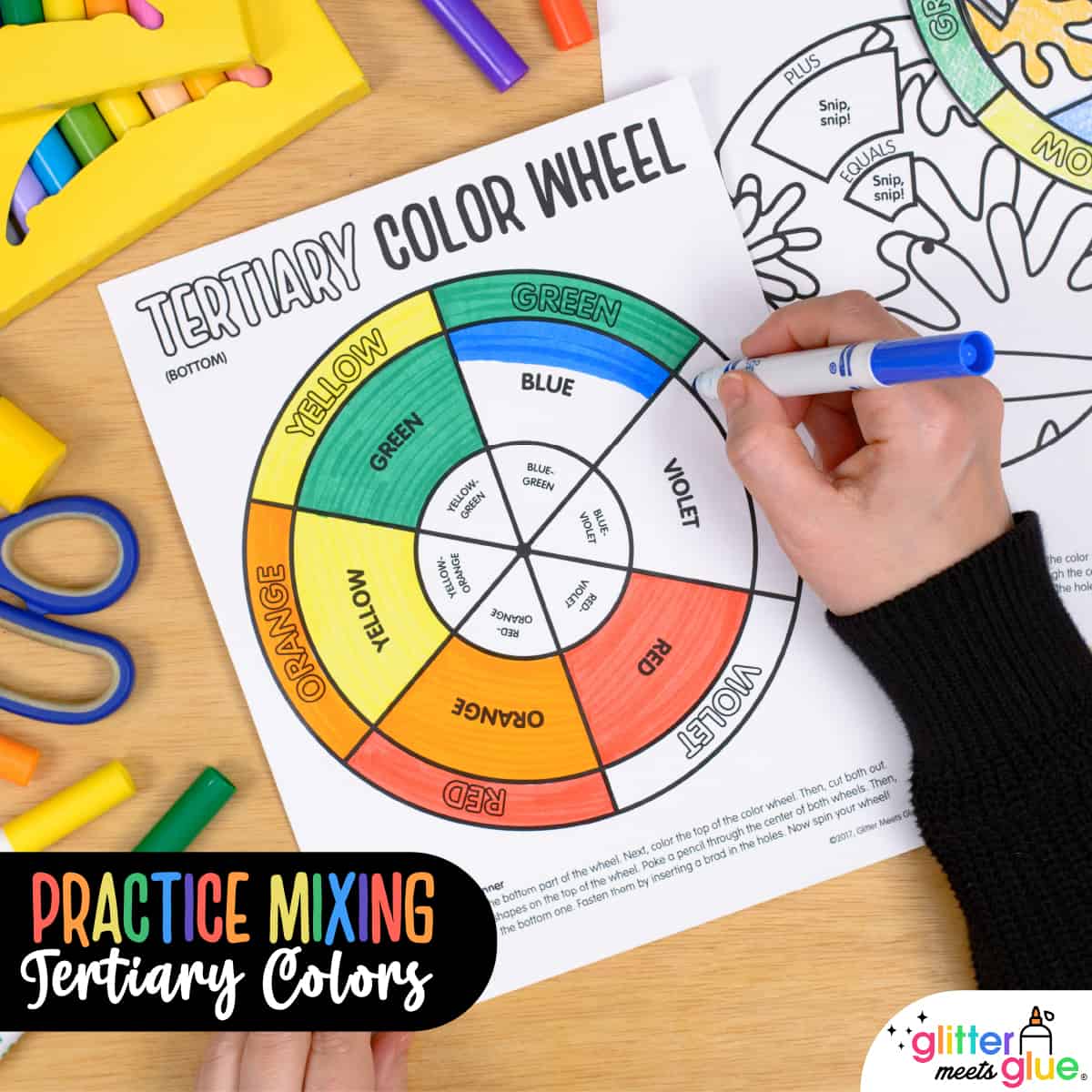
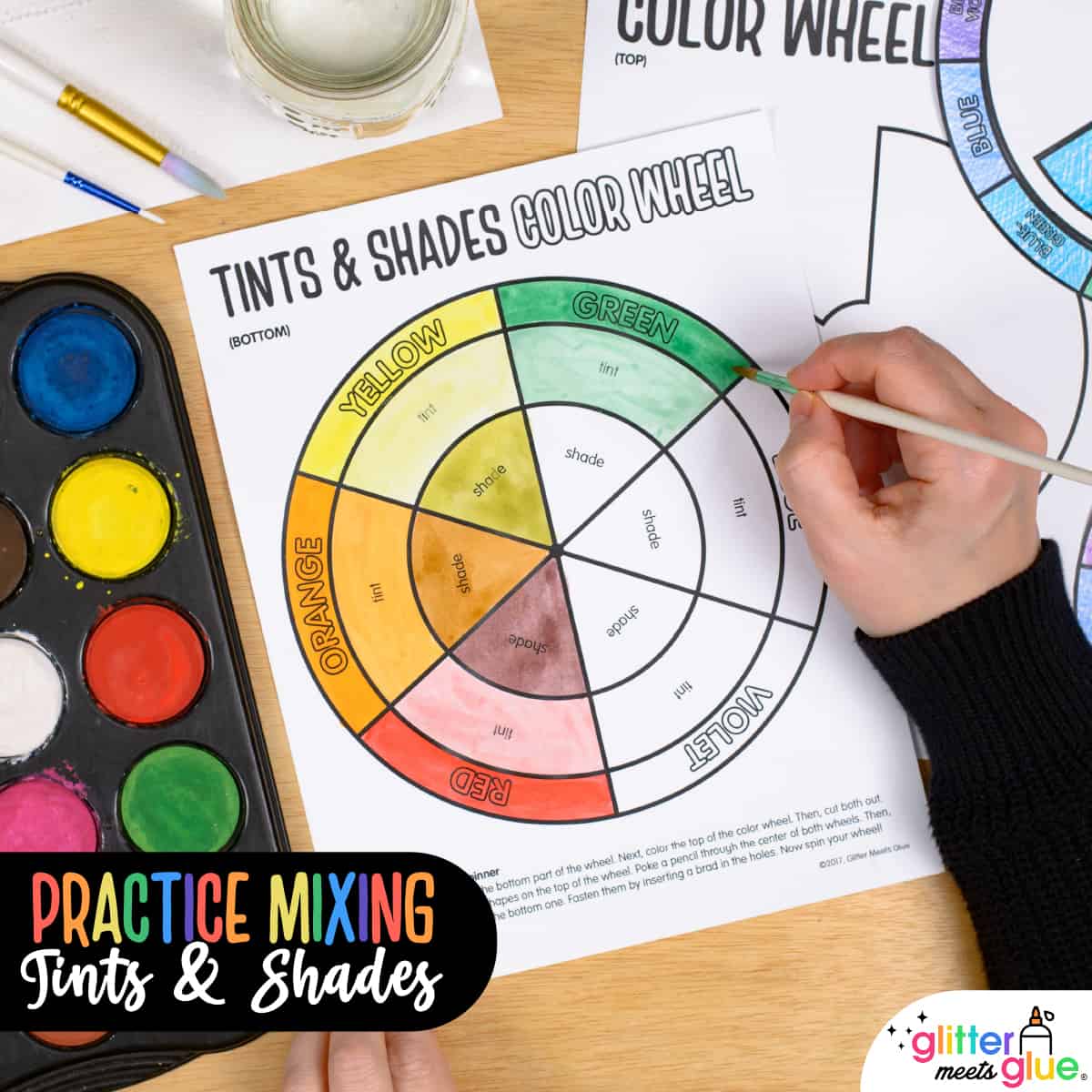
Each color wheel spinner targets either secondary, tertiary, complementary, split-complementary, or analogous colors, as well as tints and shades. In addition, the secondary and tertiary spinners come labeled and unlabeled. This means you can easily scaffold your color wheel art lessons for elementary students.
Students can use paint, colored pencils, crayons, or markers to fill them in. Once the coloring is complete, they simply cut and fasten the pieces.
After assembly, these color wheel spinners become a very hands-on tool. Students will use them repeatedly so that they can recall how to mix colors.
Color Theory Art Lesson Plans
When you spiral color wheel lessons throughout your art curriculum, students build knowledge over time. For example, here’s how I’ve taught color theory in art for elementary and middle school:
- KINDERGARTEN: I teach them that red, blue, and yellow are primary colors. They do not get a spinner.
- 1ST GRADE: They receive a secondary wheel (labeled) as well as a pre-drawn top cover. We do it together.
- 2ND GRADE:I give them a secondary wheel (unlabeled, because it’s review) and help them halfway. They fill in the remainder. In addition, they work in pairs or table groups to create a color wheel spinner for tints and shades. They also learn that colors not on the color wheel are called neutral colors.
- 3rd Grade: They get a tertiary spinner with a blank top. I guide them through making it, and I have them design something related to the color spectrum. At this point, they also learn about three complementary color pairs.
- 4th Grade: Each child gets a blank tertiary color wheel to complete on their own. During this unit, they also learn that complementaries can be mixed to make neutrals.
- 5TH GRADE: I teach them about analogous and monochromatic color schemes as well as how to mix a tone.
- 6TH GRADE: They’re given a complementary color wheel that uses tertiary colors.
- 7TH GRADE: They receive a split-complementary color wheel worksheet.
- 8TH GRADE: This year is a reinforcement of everything they’ve already learned about the color wheel.
As you can see, color theory lesson plans become more engaging with this color wheel spinner activity. Because of this, they take color theory worksheets a step further by showing kids how to use a color wheel in practice.
Color Wheel Spinner Templates Included
- Secondary (Unlabeled & Unlabeled)
- Tertiary (Unlabeled & Unlabeled)
- Complementary (with Secondaries)
- Complementary (with Tertiaries)
- Analogous
- Tints and Shades
- Split-Complementary
You Will Receive
- 1 Non-Editable PDF (Teacher Directions, Step-by-Step Student-Lead Directions, 9 Color Wheel Spinner Templates)
- Paperless Google Drive Digital Resource
Why You’ll Love It
⭐️⭐️⭐️⭐️⭐️
These wheels are a fabulous resource. I have used them with multiple grade levels. All classes enjoyed making these wheels and I believe that it gave the students a better understanding of color theory. It’s great that they can each have their own wheels that they can manipulate.
I also like that there are a variety of choices of designs. That way students are able to take some ownership and make creative choices.
⭐️⭐️⭐️⭐️⭐️
As an art teacher with primary students, I always start off the year with a focus on colour. This colour wheel was a massive hit with my grade 2s last year! It really helped us to start off the year on a fun and engaging note!
⭐️⭐️⭐️⭐️⭐️
I am teaching color theory in our after school program. The is a perfect introduction activity!
Terms of Use
Please refer to my complete terms of use prior to purchasing.
I love all things from Glitter Meets Glue! These color wheel spinners turned out so cute!
This Color Wheel Spinner Template was a fun and interactive way for students to explore color theory and color mixing through hands-on art.
These will be such a fun way to learn about the Color Wheel and a fun rescource for students once they are complete. Thank you!
The resource will be used the first weeks of school with my older students. I like the movement that the project has to help my student learn about the color wheel.
It was exactly what my students needed for extra practice with this skill.